Glucoamylase Premium for Industrial Glucose Syrup
Source industrial glucoamylase for glucose syrup with process conditions, QC checks, pilot validation, COA/TDS/SDS review, and cost-in-use guidance.
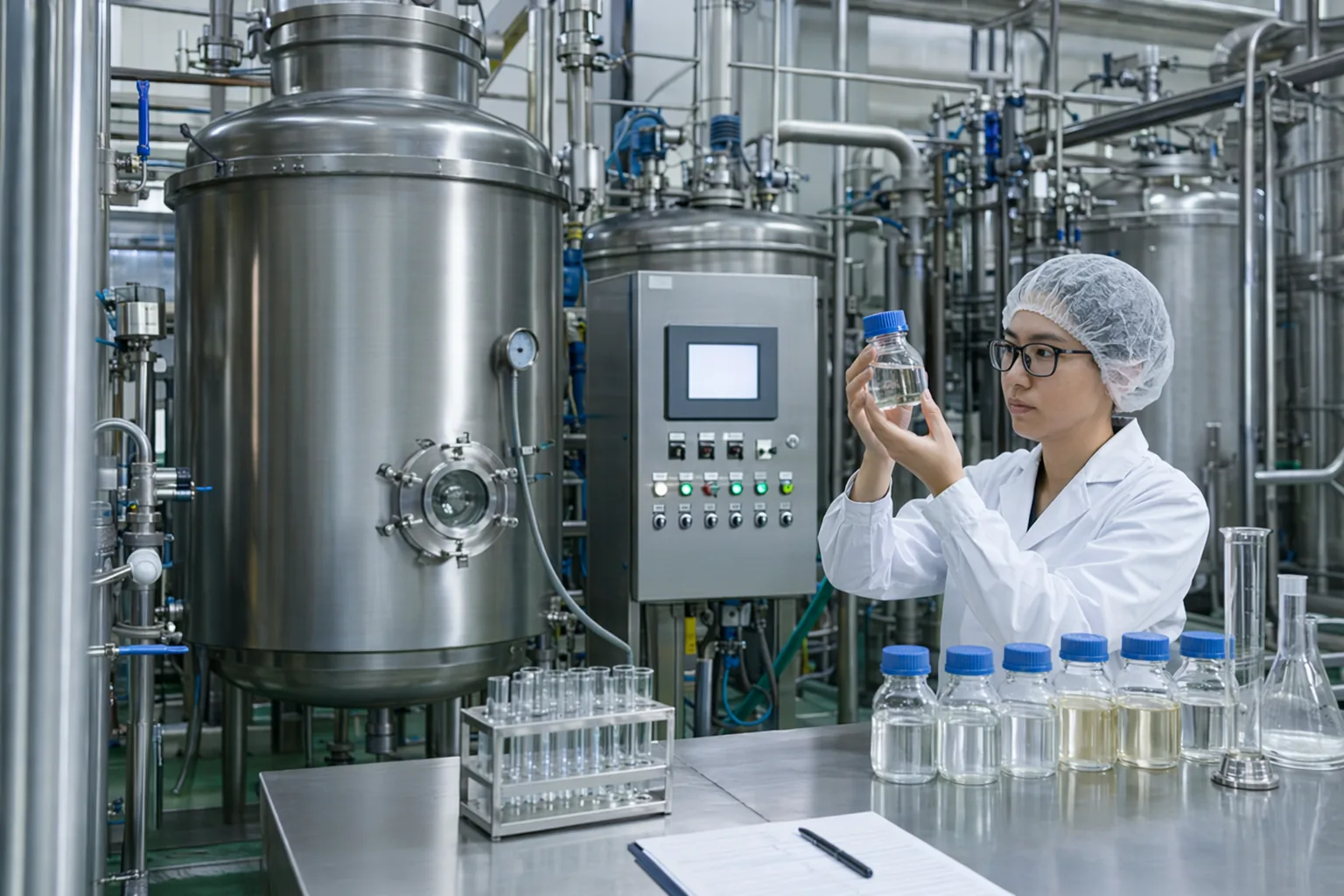
A buyer-focused guide to selecting, validating, and qualifying premium glucoamylase for efficient starch saccharification and consistent glucose syrup production.
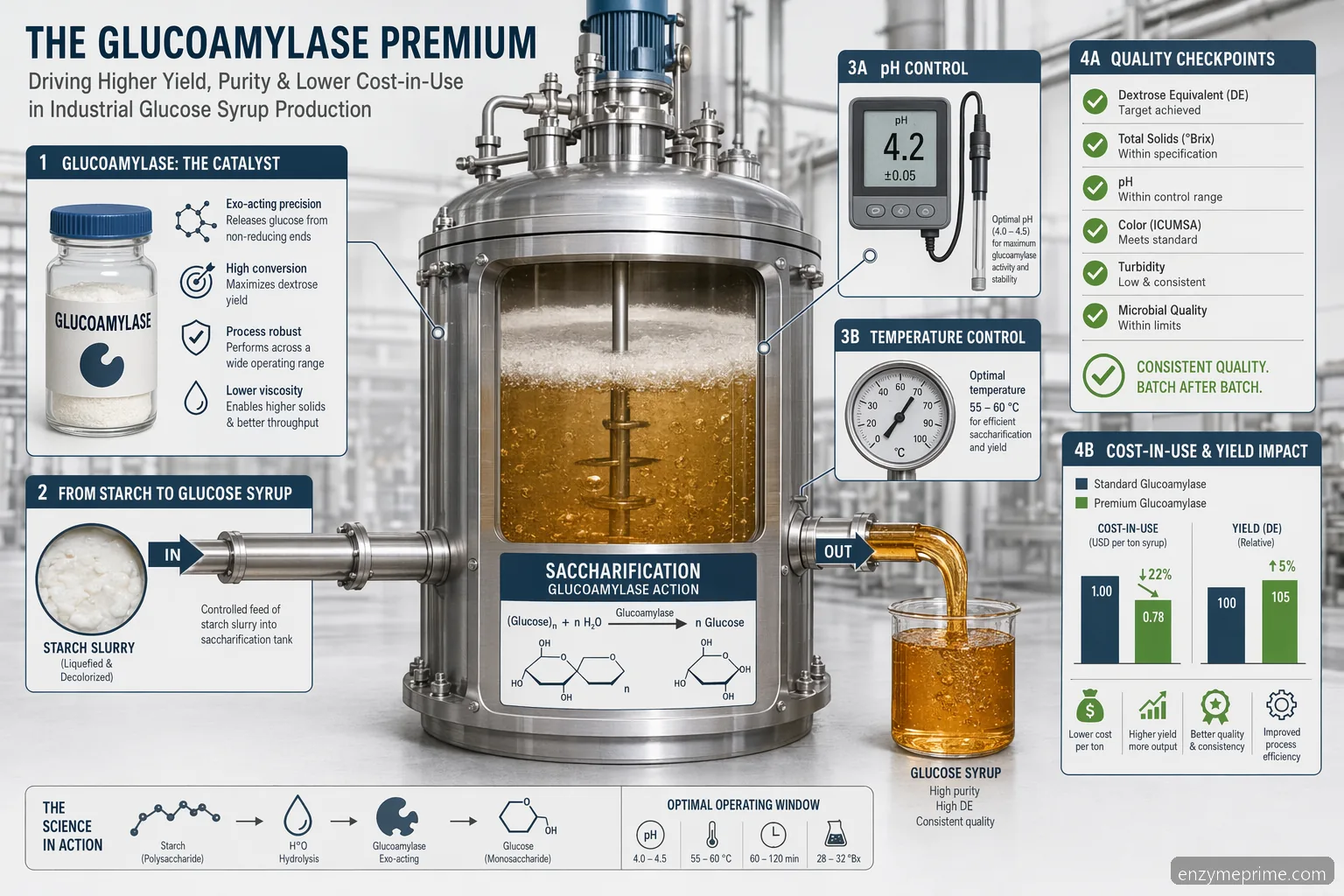
Why Glucoamylase Matters in Glucose Syrup Production
Glucoamylase is a saccharification enzyme used after starch liquefaction to convert soluble dextrins into fermentable and sweetening sugars, primarily glucose. For glucose syrup manufacturers, enzyme selection affects dextrose equivalent, residual dextrin level, filtration performance, cycle time, and downstream evaporation efficiency. When buyers ask what is glucoamylase enzyme, the practical answer is an amyloglucosidase that hydrolyzes alpha-1,4 glycosidic bonds from non-reducing starch chain ends and can also act more slowly on alpha-1,6 branch points. A premium grade is selected for predictable activity under plant conditions, batch-to-batch consistency, and compatibility with existing liquefaction, saccharification, carbon treatment, ion exchange, and evaporation steps. The right glucoamylase enzyme helps syrup plants meet target DE with controlled processing time rather than relying on excessive dosage or extended holding.
Primary use: saccharification of liquefied corn, wheat, tapioca, or potato starch. • Buyer focus: yield, DE target, process robustness, and cost per metric ton of syrup solids. • Documentation to request: COA, TDS, SDS, allergen statement where applicable, and traceability details.
Recommended Process Conditions for Saccharification
For industrial glucose syrup, glucoamylase is typically dosed into liquefied starch after alpha-amylase treatment, once the substrate is adjusted to the enzyme’s recommended pH and temperature. Common saccharification conditions are pH 4.0 to 4.8 and 58°C to 62°C, although exact settings should follow the supplier’s technical data sheet and your substrate profile. Dosage often falls in a broad band such as 0.4 to 1.2 kg per metric ton of dry starch, or an equivalent activity-based dosage, depending on liquefaction DE, dry solids, target DE, residence time, and enzyme concentration. High dry solids may require mixing review to avoid localized pH or temperature gradients. EnzymePrime recommends lab screening before plant trials because a lower purchase price enzyme can cost more if it requires higher dosage, longer saccharification, or creates more residual oligosaccharides.
Typical pH: 4.0–4.8, validated against the product TDS. • Typical temperature: 58–62°C for many fungal glucoamylase systems. • Typical dosage band: 0.4–1.2 kg per metric ton dry starch, activity dependent. • Monitor: DE rise, glucose percentage, residual dextrins, pH drift, and microbial control.
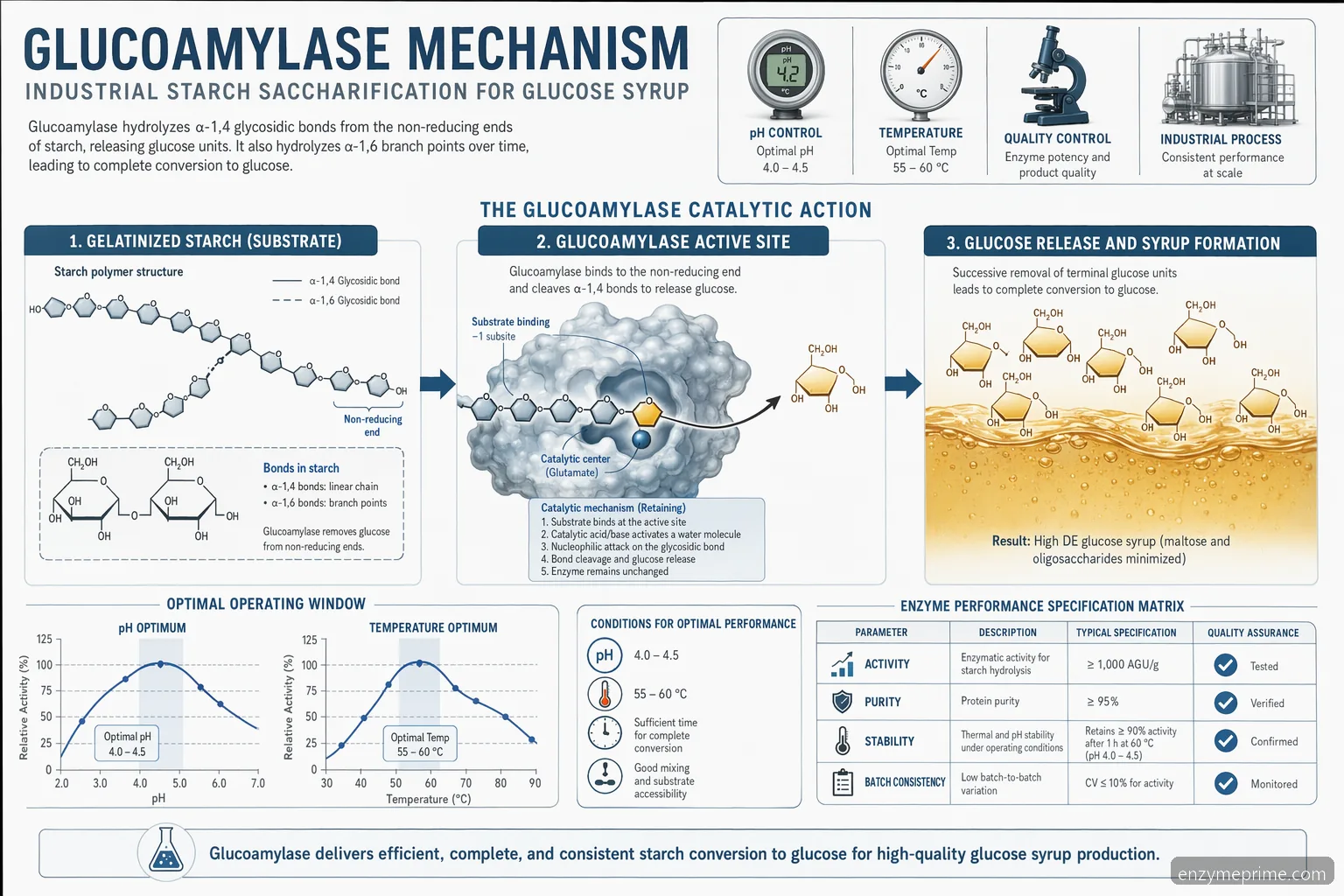
What Does Glucoamylase Do to Starch?
Buyers often search what does glucoamylase do or what does glucoamylase break down because the enzyme’s role is different from liquefying alpha-amylase. Alpha-amylase rapidly reduces starch viscosity by cutting internal alpha-1,4 bonds, while glucoamylase releases glucose units stepwise from the non-reducing ends of dextrins formed during liquefaction. This makes it the key starch to glucose enzyme for high-DE syrup production. In practice, the enzyme continues working until the glucose target, residual dextrin limit, or economic endpoint is reached. Pullulanase or other debranching enzymes may be used in some processes to improve conversion where alpha-1,6 branches limit access. A properly selected liquid glucoamylase should maintain activity through the planned saccharification hold, minimize side activity concerns, and fit the plant’s cleaning, storage, and dosing systems.
Breaks down soluble dextrins and maltodextrins into glucose. • Acts mainly from non-reducing chain ends. • Supports high-DE syrup and feedstock for high fructose corn syrup. • Can be paired with debranching enzymes when conversion economics justify it.
Quality Checks Before Purchase
A serious B2B procurement process should go beyond quoted activity and price. Request a current COA for representative lots and confirm the activity method, unit definition, appearance, density, pH, recommended storage, shelf life, and microbiological specifications. The TDS should state process guidance, substrate compatibility, dosage basis, and handling recommendations. The SDS should be reviewed by EHS teams for safe storage, worker protection, spill management, and transport classification. For incoming QC, plants commonly verify visual condition, odor, pH, activity by an approved method, and lot identity against purchase documents. During pilot validation, track DE, glucose profile by HPLC or equivalent, saccharification time, filtration behavior, color impact, and final syrup specifications. Supplier qualification should include manufacturing consistency, change notification practices, technical support capability, and complaint response procedures.
Compare enzyme offers on activity-adjusted cost, not only price per kilogram. • Confirm whether the product is liquid glucoamylase or dry granulate before dosing design. • Review storage temperature and shelf-life limits before bulk ordering. • Ask for pilot support and lot-to-lot performance data where available.
Cost-in-Use and Supplier Qualification
The best glucoamylase supplier is not always the lowest unit-price supplier. Cost-in-use should include enzyme dosage, saccharification residence time, target DE achievement, syrup yield, energy use, filtration effects, rework risk, inventory stability, and technical support. A premium AMG-style saccharification enzyme may justify its price when it reaches specification faster or more consistently at lower effective dosage. For a fair comparison, run side-by-side trials on the same liquefied starch stream, dry solids, pH, temperature, and residence time. Use identical analytical methods and calculate cost per metric ton of glucose syrup solids at the target specification. Supplier qualification should also review documentation responsiveness, batch traceability, packaging options, lead time reliability, change control communication, and ability to support scale-up. EnzymePrime.com helps industrial buyers evaluate fit before committing to routine supply.
Use pilot data to compare real plant economics. • Normalize costs by dry starch input and final syrup solids. • Assess logistics, packaging, and inventory risk. • Require COA/TDS/SDS review before approval.
Technical Buying Checklist
Buyer Questions
Glucoamylase is an industrial saccharification enzyme that converts liquefied starch dextrins into glucose. In glucose syrup production, it is normally used after alpha-amylase liquefaction, when starch has already been reduced to soluble dextrins. Its value is measured by conversion efficiency, DE development, glucose yield, processing time, and consistency under the plant’s validated pH and temperature conditions.
Glucoamylase breaks down maltodextrins, oligosaccharides, and soluble starch fragments created during liquefaction. It releases glucose from non-reducing ends by hydrolyzing mainly alpha-1,4 bonds and, more slowly, alpha-1,6 branch points. This makes it a practical starch to glucose enzyme for high-DE glucose syrup and for feed syrup used before isomerization in high fructose corn syrup processes.
Compare liquid glucoamylase products using activity-adjusted dosage, performance at your operating pH and temperature, DE endpoint, glucose profile, residual dextrins, storage stability, and documentation quality. A side-by-side pilot trial is the most reliable method. Review COA, TDS, and SDS, then calculate cost-in-use per metric ton of syrup solids that meets specification.
Maltase glucoamylase can refer to biological enzymes involved in carbohydrate digestion, while industrial glucoamylase refers to enzyme preparations manufactured for food, fermentation, brewing, and starch processing operations. For B2B glucose syrup procurement, the relevant specification is industrial performance: activity method, process stability, safe handling data, batch consistency, and validated conversion under plant saccharification conditions.
At minimum, request a COA for recent lots, a technical data sheet, and a safety data sheet. Many buyers also require lot traceability, shelf-life and storage statements, packaging specifications, change notification practices, and food-production suitability documentation relevant to their market. Final approval should be based on pilot validation, incoming QC results, and supplier performance during trial orders.
Glucoamylase (Premium Grade) for Research & Industry
Need Glucoamylase (Premium Grade) for your lab or production process?
ISO 9001 certified · Food-grade & research-grade · Ships to 80+ countries
Frequently Asked Questions
What is glucoamylase?
Glucoamylase is an industrial saccharification enzyme that converts liquefied starch dextrins into glucose. In glucose syrup production, it is normally used after alpha-amylase liquefaction, when starch has already been reduced to soluble dextrins. Its value is measured by conversion efficiency, DE development, glucose yield, processing time, and consistency under the plant’s validated pH and temperature conditions.
What does glucoamylase break down in syrup production?
Glucoamylase breaks down maltodextrins, oligosaccharides, and soluble starch fragments created during liquefaction. It releases glucose from non-reducing ends by hydrolyzing mainly alpha-1,4 bonds and, more slowly, alpha-1,6 branch points. This makes it a practical starch to glucose enzyme for high-DE glucose syrup and for feed syrup used before isomerization in high fructose corn syrup processes.
How should buyers compare liquid glucoamylase products?
Compare liquid glucoamylase products using activity-adjusted dosage, performance at your operating pH and temperature, DE endpoint, glucose profile, residual dextrins, storage stability, and documentation quality. A side-by-side pilot trial is the most reliable method. Review COA, TDS, and SDS, then calculate cost-in-use per metric ton of syrup solids that meets specification.
Is maltase glucoamylase the same as industrial glucoamylase?
Maltase glucoamylase can refer to biological enzymes involved in carbohydrate digestion, while industrial glucoamylase refers to enzyme preparations manufactured for food, fermentation, brewing, and starch processing operations. For B2B glucose syrup procurement, the relevant specification is industrial performance: activity method, process stability, safe handling data, batch consistency, and validated conversion under plant saccharification conditions.
What documents are needed to qualify a glucoamylase supplier?
At minimum, request a COA for recent lots, a technical data sheet, and a safety data sheet. Many buyers also require lot traceability, shelf-life and storage statements, packaging specifications, change notification practices, and food-production suitability documentation relevant to their market. Final approval should be based on pilot validation, incoming QC results, and supplier performance during trial orders.
Related: Buy Glucoamylase for Reliable Starch Conversion
Turn This Guide Into a Supplier Brief Request Glucoamylase Premium documentation, samples, and pilot-trial support from EnzymePrime. See our application page for Buy Glucoamylase for Reliable Starch Conversion at /applications/buy-glucoamylase-price/ for specs, MOQ, and a free 50 g sample.
Contact Us to Contribute