Brewing With Glucoamylase: Glucoamylase Premium Specification Checklist for Brewing
Compare glucoamylase specs for brewing: dosage, pH, temperature, COA/TDS/SDS, pilot trials, cost-in-use, and supplier checks.
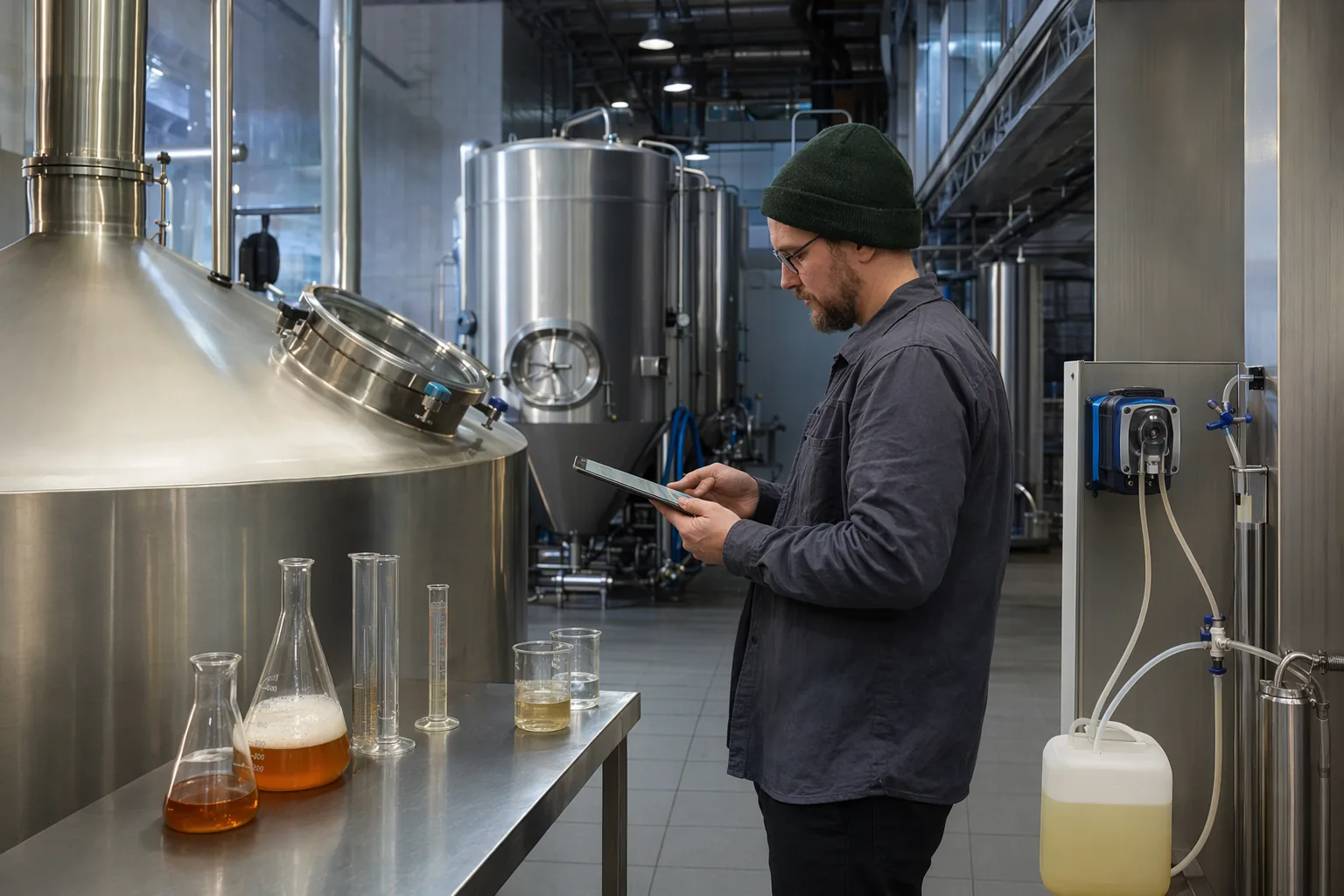
A practical buyer’s guide for breweries evaluating Glucoamylase Premium as a saccharification enzyme for light beer, dry beer, high attenuation, and adjunct-heavy brewing.
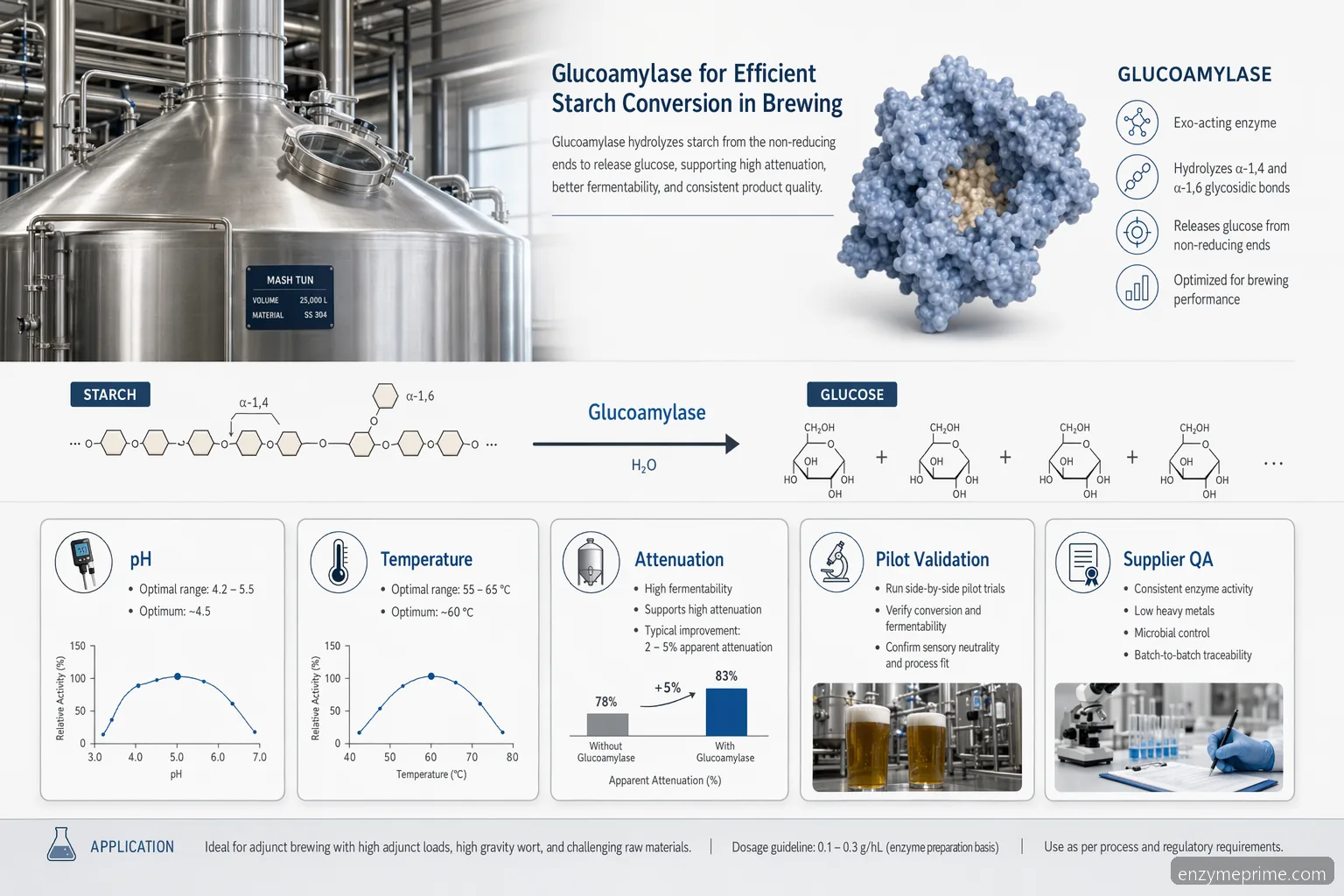
Why compare glucoamylase options for brewing?
Brewing with glucoamylase changes the fermentability profile of wort by hydrolyzing alpha-1,4 and alpha-1,6 glucosidic bonds from starch-derived dextrins, releasing fermentable glucose. That makes it valuable for brewing light beer with glucoamylase, producing dry profiles, increasing apparent attenuation, or processing high-adjunct grists where native malt enzymes may not deliver the target carbohydrate spectrum. In comparison projects, buyers should look beyond enzyme activity on a label. The relevant question is whether the glucoamylase enzyme brewing program delivers repeatable final gravity, clean sensory results, predictable fermentation kinetics, and stable process economics at plant scale. Glucoamylase Premium should be assessed against existing mash schedules, yeast performance, filtration capacity, and packaging targets. A strong comparison uses the same wort, same yeast, same fermentation conditions, and measured sugar conversion data so procurement, brewing, and quality teams can make a defensible supplier decision.
Best fit: light beer, dry beer, high attenuation, adjunct brewing, and controlled saccharification. • Main comparison point: performance per batch, not catalog activity alone. • Key risk: over-attenuation if dosage, contact time, or inactivation are not controlled.
Process conditions to screen before purchase
Industrial glucoamylase brewing trials should define where the enzyme will be used: mash, cereal cooker, saccharification hold, or fermentation. Many fungal glucoamylase preparations are screened around pH 4.0-5.5 and 55-65°C in saccharification-style applications, while fermenter-side use occurs at lower temperatures and requires confirmation of meaningful activity under actual brewery conditions. For mash-side use, buyers should verify compatibility with calcium levels, grist composition, liquefaction quality, and any alpha-amylase step. For fermenter-side use, confirm yeast compatibility, attenuation curve, diacetyl rest behavior, and whether enzyme activity continues into conditioning. Dosage should be set by enzyme activity units and supplier guidance, then bracketed in pilot trials. Practical screening bands often include low, medium, and high additions rather than a single dose, because wort composition and desired residual body strongly influence the optimum.
Mash or saccharification screening: commonly pH 4.0-5.5 and 55-65°C. • Fermentation screening: validate at actual fermentation temperature and pH. • Use unit-based dosage; bracket trials to avoid under- or over-attenuation. • Track contact time and thermal inactivation assumptions.
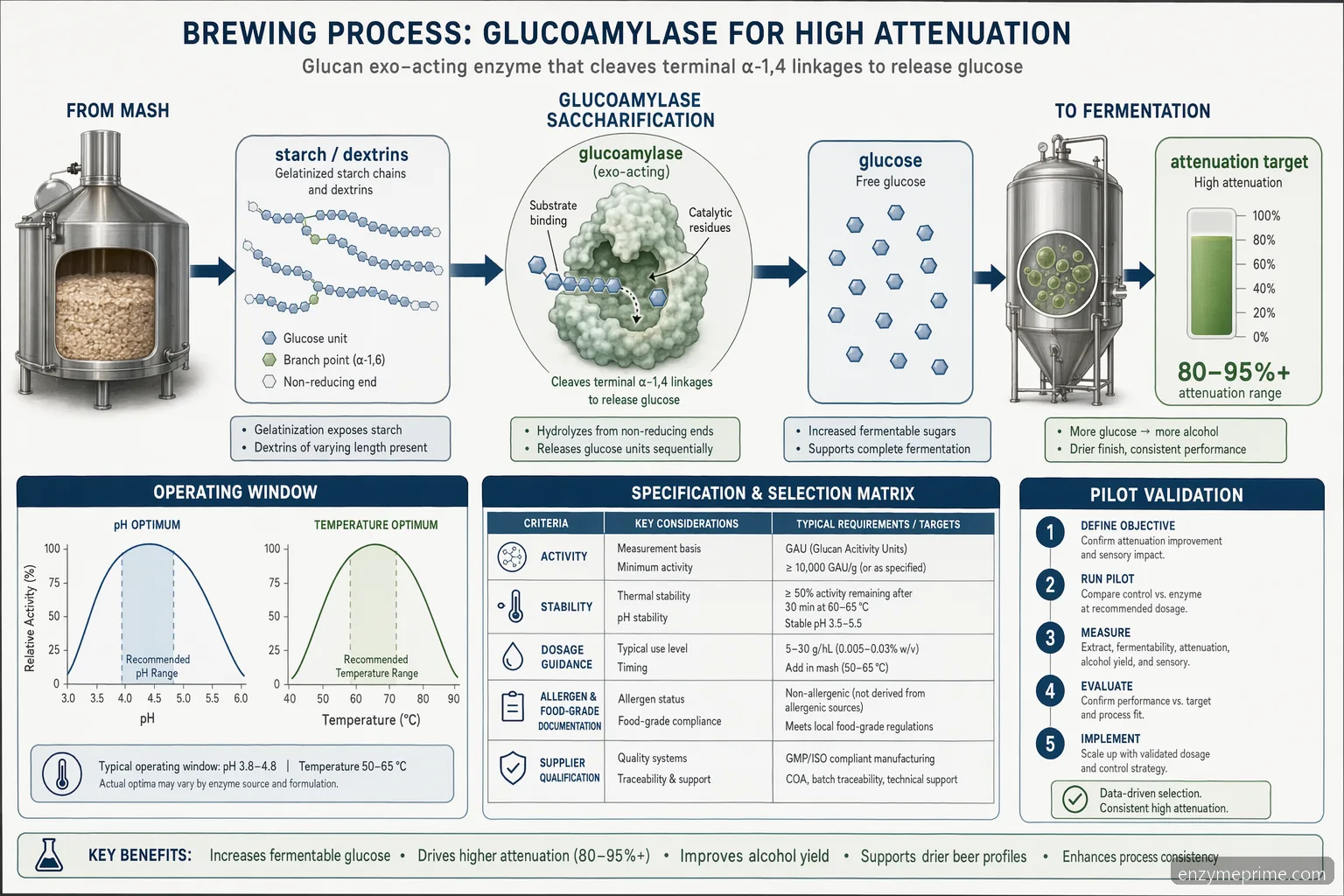
Specification checklist for Glucoamylase Premium
A glucoamylase supplier for brewing should provide documentation that lets the brewery compare quality, safety handling, and process fit. The Technical Data Sheet should state enzyme source, declared activity, activity test method, recommended pH and temperature range, storage conditions, shelf-life, appearance, solubility, and handling notes. The Certificate of Analysis should match the shipped lot and include activity, microbiological limits where applicable, and lot identification. The Safety Data Sheet should cover occupational handling, PPE, spill management, respiratory sensitization warnings, and disposal guidance. For liquid enzymes, evaluate carrier system, density, preservative approach, dosing pump compatibility, freeze-thaw sensitivity, and viscosity. For powder enzymes, evaluate dust control and dispersion. Supplier qualification should also include change notification practices, batch traceability, lead time reliability, packaging options, and ability to support pilot validation with application guidance.
Request COA for each lot, not only a generic specification. • Compare activity method and units before comparing price. • Confirm storage temperature, shelf-life, and opened-container handling. • Review SDS for enzyme dust or aerosol exposure controls.
How to run a pilot validation
A meaningful glucoamylase in brewing trial should be designed with a control batch and at least two enzyme dosage levels. Keep malt bill, adjunct ratio, mash profile, wort gravity, oxygenation, yeast strain, pitch rate, and fermentation temperature consistent. Measure wort glucose, maltose, maltotriose, limit dextrins, original gravity, final gravity, apparent attenuation, pH, ABV, VDK, and fermentation time. Sensory review is essential because higher glucose availability can change fermentation speed and dryness perception. Packaging quality should include foam, haze, filtration behavior, and colloidal stability where relevant. If the enzyme is added in mash, verify whether the boil or later heat step inactivates it. If added to fermentation, determine whether residual activity continues to reduce dextrins beyond the intended endpoint. A successful pilot produces a dosage window, not just a pass or fail.
Include a no-enzyme control and multiple dosage points. • Measure both analytical conversion and sensory impact. • Check final gravity stability before release. • Confirm process endpoint and inactivation strategy.
Cost-in-use and supplier qualification
For industrial glucoamylase brewing procurement, cost-in-use is the comparison metric that matters. Calculate enzyme cost per hectoliter or per metric ton of grist at the validated dose, then include yield improvement, gravity control, fermentation time, rework reduction, filtration impact, and any change to raw material strategy. A lower-priced glucoamylase enzyme can be more expensive if it requires higher dosage, creates inconsistent attenuation, or lacks technical support. Supplier qualification should verify manufacturing consistency, lot-to-lot activity control, realistic lead times, packaging suitable for brewery dosing systems, and documentation responsiveness. Avoid unsupported claims and ask for data relevant to your substrate, temperature, and pH. Enzymeprime.com can support buyers comparing Glucoamylase Premium for brewing applications by aligning specification review, sample planning, pilot protocol, and commercial supply assumptions before scale-up.
Compare cost per hectoliter at validated dose. • Include yield, attenuation consistency, and fermentation cycle effects. • Qualify documentation, traceability, logistics, and technical support. • Approve only after pilot data match production targets.
Technical Buying Checklist
Buyer Questions
The main benefit is increased fermentability through conversion of residual dextrins into glucose. This can support light beer, dry beer, high attenuation targets, and adjunct-heavy recipes. The benefit must be validated against final gravity, sensory profile, fermentation speed, foam, and filtration. In B2B purchasing, the best enzyme is the one that delivers the required specification at the lowest reliable cost-in-use.
Both approaches are used, but they require different controls. Mash or saccharification addition allows temperature and pH management and may allow later thermal inactivation. Fermentation addition can continue dextrin breakdown during yeast activity, but it needs careful validation to avoid excessive attenuation or endpoint drift. The right choice depends on beer style, equipment, yeast, desired body, and quality release criteria.
Request a current Technical Data Sheet, Safety Data Sheet, and lot-specific Certificate of Analysis. The TDS should explain activity, use conditions, storage, and handling. The SDS should address occupational exposure and safe handling. The COA should verify the shipped lot. For supplier qualification, also ask about traceability, change notification, packaging, lead time, and technical support for pilot trials.
Compare pricing by validated cost-in-use, not by container price. Calculate cost per hectoliter or per metric ton of grist at the dose that reaches target attenuation and quality. Include any effects on fermentation time, raw material flexibility, filtration, rework, and batch consistency. A product with higher activity, better stability, or stronger application support may reduce total operating cost.
Glucoamylase (Premium Grade) for Research & Industry
Need Glucoamylase (Premium Grade) for your lab or production process?
ISO 9001 certified · Food-grade & research-grade · Ships to 80+ countries
Frequently Asked Questions
What is the main benefit of brewing with glucoamylase?
The main benefit is increased fermentability through conversion of residual dextrins into glucose. This can support light beer, dry beer, high attenuation targets, and adjunct-heavy recipes. The benefit must be validated against final gravity, sensory profile, fermentation speed, foam, and filtration. In B2B purchasing, the best enzyme is the one that delivers the required specification at the lowest reliable cost-in-use.
Should glucoamylase be added in the mash or fermentation?
Both approaches are used, but they require different controls. Mash or saccharification addition allows temperature and pH management and may allow later thermal inactivation. Fermentation addition can continue dextrin breakdown during yeast activity, but it needs careful validation to avoid excessive attenuation or endpoint drift. The right choice depends on beer style, equipment, yeast, desired body, and quality release criteria.
What documents should a brewery request from a glucoamylase supplier?
Request a current Technical Data Sheet, Safety Data Sheet, and lot-specific Certificate of Analysis. The TDS should explain activity, use conditions, storage, and handling. The SDS should address occupational exposure and safe handling. The COA should verify the shipped lot. For supplier qualification, also ask about traceability, change notification, packaging, lead time, and technical support for pilot trials.
How should breweries compare glucoamylase enzyme pricing?
Compare pricing by validated cost-in-use, not by container price. Calculate cost per hectoliter or per metric ton of grist at the dose that reaches target attenuation and quality. Include any effects on fermentation time, raw material flexibility, filtration, rework, and batch consistency. A product with higher activity, better stability, or stronger application support may reduce total operating cost.
Related: Buy Glucoamylase for Reliable Starch Conversion
Turn This Guide Into a Supplier Brief Request Glucoamylase Premium COA/TDS/SDS and plan a brewing pilot with Enzymeprime. See our application page for Buy Glucoamylase for Reliable Starch Conversion at /applications/buy-glucoamylase-price/ for specs, MOQ, and a free 50 g sample.
Contact Us to Contribute