Application of Glucoamylase Premium in Glucose Syrup Production
Guide to the application of glucoamylase in glucose syrup: pH, temperature, dosage, QC, pilot trials, and supplier qualification.
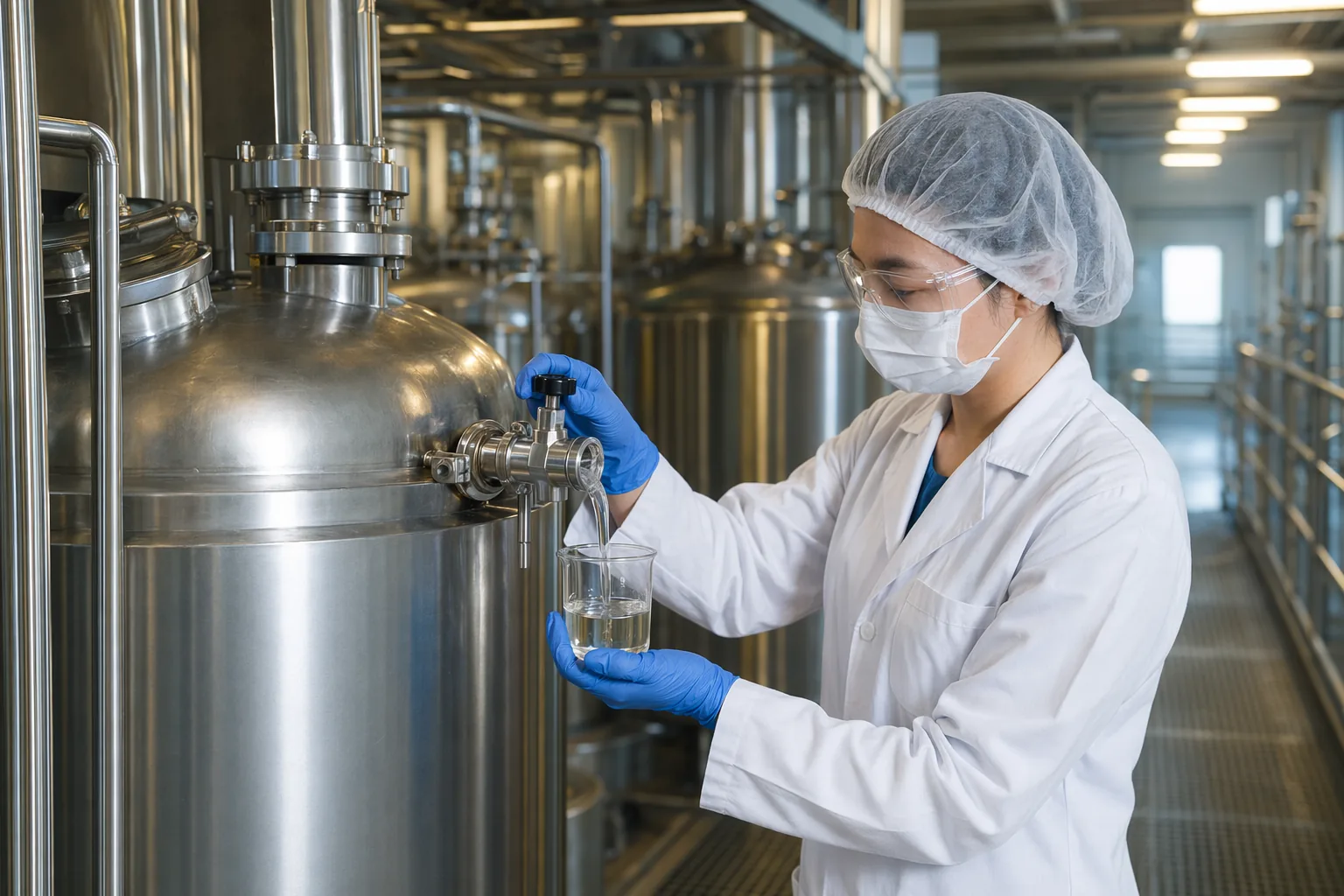
A practical B2B process guide for using Glucoamylase Premium as a saccharification enzyme to convert liquefied starch into high-glucose syrup.
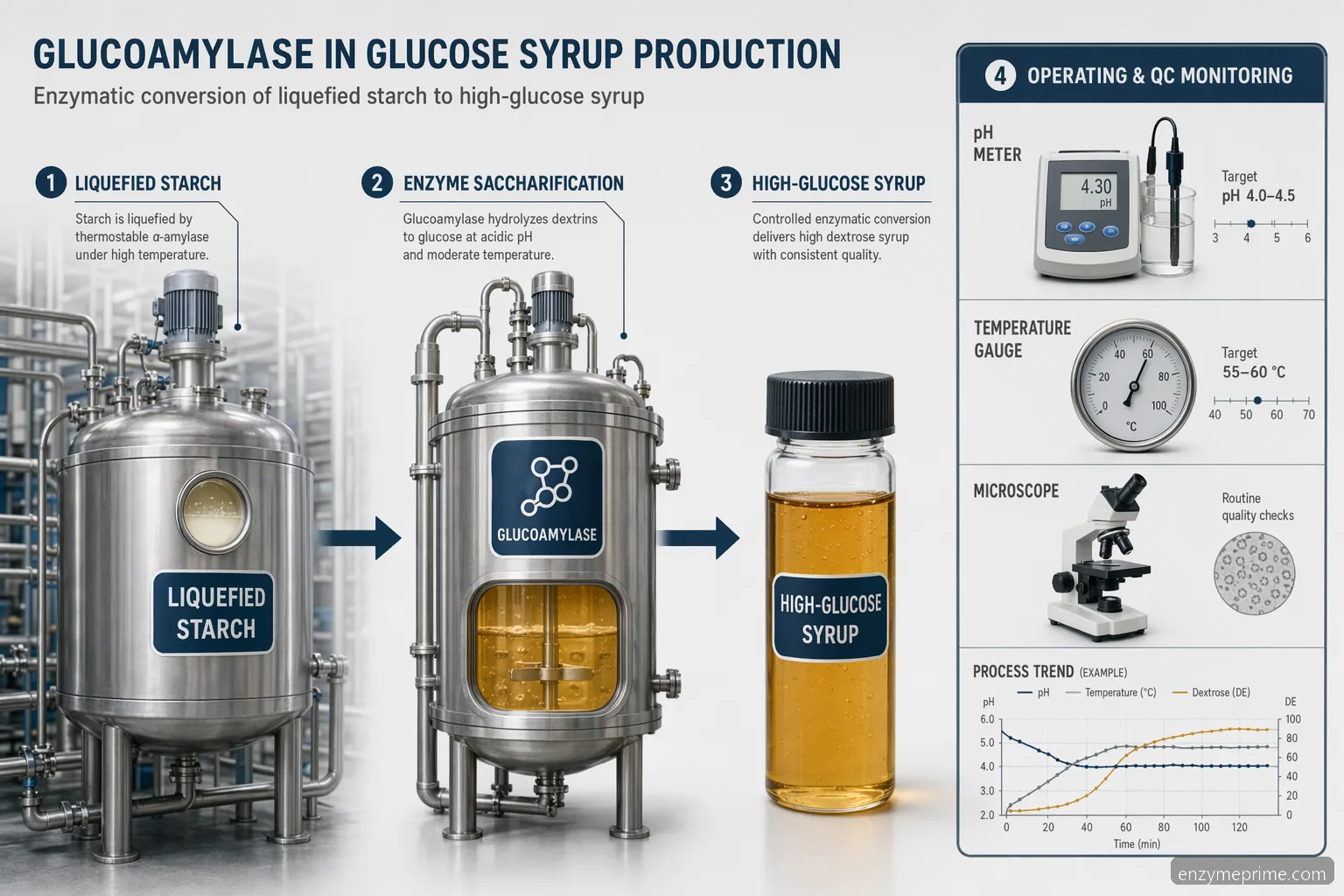
What glucoamylase does in glucose syrup production
Glucoamylase is an exo-acting starch to glucose enzyme used after starch liquefaction. In glucose syrup manufacturing, alpha-amylase first reduces gelatinized starch into soluble dextrins; Glucoamylase Premium then hydrolyzes alpha-1,4 glycosidic bonds from the non-reducing ends and can also slowly attack alpha-1,6 branch points. The practical result is higher dextrose equivalent, increased glucose content, and a syrup profile suitable for downstream refining, concentration, or conversion to high fructose corn syrup. For buyers asking what does glucoamylase do, the answer is process-specific: it completes saccharification by breaking down maltodextrins, maltose, and longer oligosaccharides into glucose. This page focuses on industrial glucoamylase application for glucose syrup, not dietary enzymes, supplements, or the human maltase glucoamylase system.
Primary role: saccharification of liquefied starch. • Target product: glucose-rich syrup for industrial use. • Common substrates: corn, wheat, tapioca, or potato starch hydrolysates.
Where Glucoamylase Premium fits in the process
The application of glucoamylase begins after liquefaction, when starch slurry has been gelatinized, partially hydrolyzed, and cooled to the saccharification range. A typical process adjusts the liquefied mash to the selected pH, confirms soluble dextrin quality, and doses the glucoamylase enzyme into a stirred saccharification tank. Uniform mixing is important because local enzyme under-dosing can leave higher DP sugars, while poor pH control may reduce conversion efficiency. The saccharified liquor is then clarified, decolorized if required, ion-exchanged depending on product grade, and evaporated to the required solids. For plants supplying glucose syrup into food, fermentation, confectionery, or HFCS feedstock applications, the enzyme stage should be managed as a controlled unit operation rather than a commodity addition.
Add after liquefaction and pH adjustment. • Maintain agitation to ensure even enzyme distribution. • Monitor saccharification progress before refining.
Operating conditions and dosage guidance
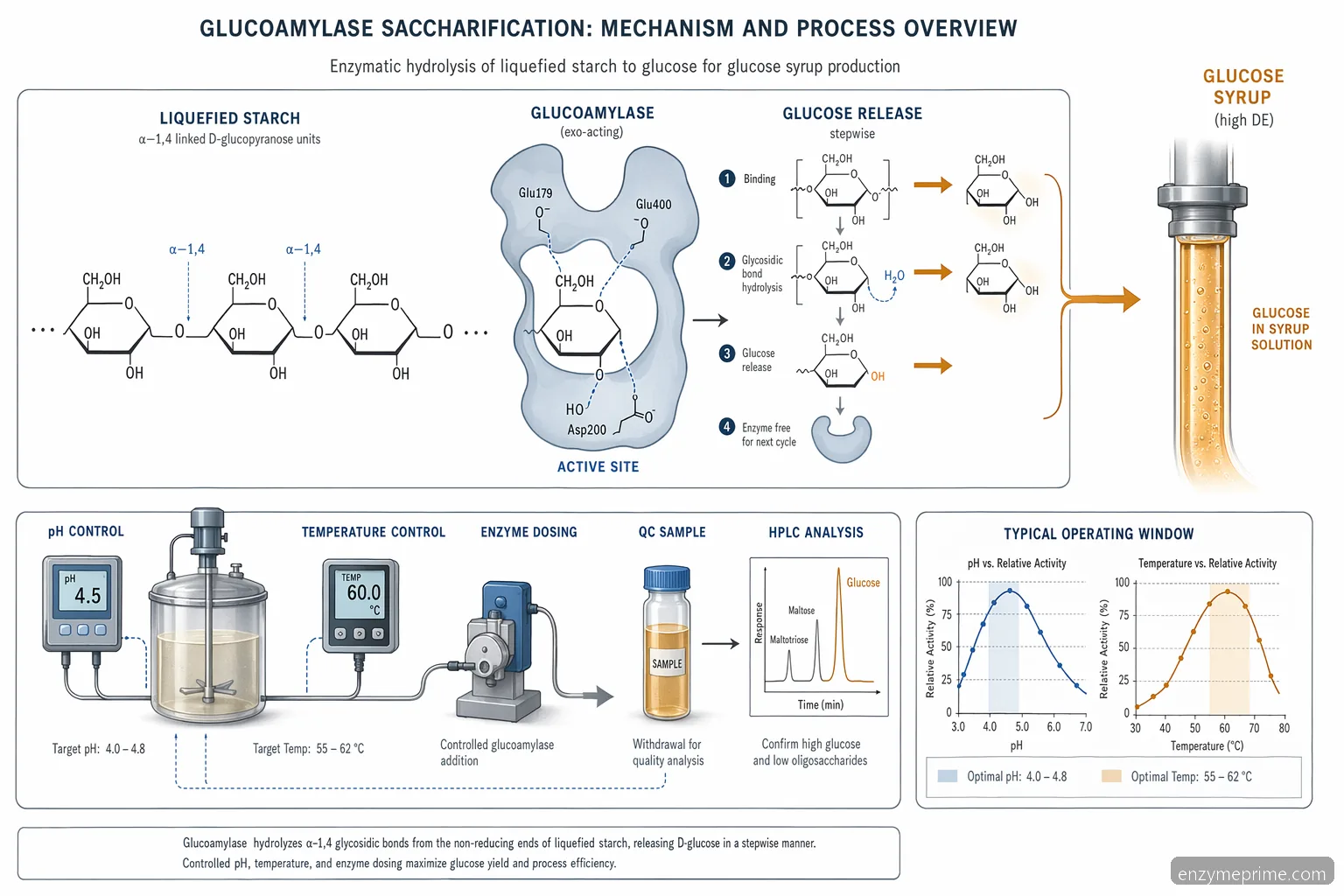
Process conditions should be confirmed against the product TDS and pilot data, but many glucose syrup plants evaluate glucoamylase within pH 4.0–4.5 and 58–62°C. Saccharification time often ranges from 24 to 48 hours, depending on dry solids, liquefaction quality, enzyme activity, desired DE, and target glucose percentage. A practical starting dosage band is commonly expressed per metric ton of dry starch or dry substance; buyers should request supplier guidance based on declared activity units, not only liquid weight. Over-dosing can reduce batch time but may not improve economics, while under-dosing can leave residual maltose and higher saccharides. For robust trials, document substrate origin, liquefaction DE, dry solids, calcium carryover, pH adjustment agent, enzyme addition point, and final syrup specification.
Typical pH evaluation range: 4.0–4.5. • Typical temperature evaluation range: 58–62°C. • Common trial duration: 24–48 hours. • Set dosage by activity units and cost-in-use.
Quality control during saccharification
A reliable glucoamylase application depends on routine analytical control. Before dosing, confirm liquefaction endpoint, absence of starch haze by iodine testing where applicable, pH, temperature, dry solids, and tank readiness. During saccharification, track DE, glucose content, residual maltose, DP profile, and pH drift at defined intervals. HPLC sugar profile is preferred for precise glucose, maltose, maltotriose, and higher saccharide measurement, while reducing sugar methods may be useful for operational screening. Final syrup should also be checked for color, turbidity, ash, conductivity, microbial limits where relevant, and filtration behavior. These QC checks help distinguish enzyme performance from upstream liquefaction variation, substrate variability, contamination, or holding-time issues.
Check DE and glucose percentage against product target. • Use HPLC for sugar profile confirmation. • Monitor pH and temperature throughout the hold. • Record filtration and clarification behavior.
Pilot validation and cost-in-use
Before changing a commercial enzyme program, run pilot validation under conditions that reflect the plant’s actual substrate, dry solids, retention time, tank geometry, and refining steps. Compare Glucoamylase Premium against the current process using equalized activity assumptions and defined endpoints, not only kilograms of enzyme added. Cost-in-use should include enzyme dose, saccharification time, yield impact, rework risk, filtration performance, evaporator load, and any change in downstream conversion if the syrup feeds HFCS production. The best dosage is usually the one that meets glucose and DE targets consistently at the lowest validated total process cost. A well-designed trial should include a control batch, at least two dosage levels, retained samples, and a documented decision matrix.
Validate on real plant substrate, not only lab starch. • Compare by activity-normalized performance. • Include downstream processing effects in cost-in-use. • Retain samples for sugar profile and stability review.
Supplier qualification and documentation
Industrial enzyme procurement should evaluate both technical fit and supplier controls. For each lot of Glucoamylase Premium, request a certificate of analysis with activity, appearance, batch number, manufacture or release date, and relevant test results. The technical data sheet should define recommended pH, temperature, dosage guidance, storage, handling, and application notes. The safety data sheet should support workplace risk assessment, spill response, and PPE planning. Buyers may also request allergen or food-contact statements when relevant to their market, but should avoid assuming certifications that are not documented. Supplier qualification should cover batch traceability, change notification, lead time, packaging integrity, sample availability, pilot support, and the ability to answer process questions with application data.
Request current COA, TDS, and SDS. • Confirm activity method and batch traceability. • Assess technical support for pilot and scale-up. • Review packaging, shelf life, and storage requirements.
Technical Buying Checklist
Buyer Questions
In glucose syrup production, glucoamylase enzyme is used as the saccharification enzyme after liquefaction. It breaks down soluble dextrins, maltose, and higher oligosaccharides into glucose, raising DE and glucose content. This application of glucoamylase is industrial and process-driven, with performance measured by syrup composition, conversion time, filtration behavior, and total cost-in-use.
Glucoamylase breaks down starch-derived dextrins by hydrolyzing glucose units from the non-reducing ends of carbohydrate chains. In practical syrup production, it acts on maltodextrins, maltose, maltotriose, and higher saccharides created during liquefaction. It primarily hydrolyzes alpha-1,4 linkages and can slowly hydrolyze alpha-1,6 branch linkages, helping convert liquefied starch toward glucose.
Many glucose syrup plants evaluate glucoamylase at pH 4.0–4.5 and 58–62°C, but the exact optimum depends on enzyme formulation, substrate, dry solids, and process time. Buyers should use the supplier TDS as the starting point and confirm conditions through pilot trials. Stable pH and temperature control are essential for repeatable saccharification and predictable glucose yield.
Dosage should be based on declared enzyme activity, dry starch or dry substance, saccharification time, and final syrup specification. A useful pilot plan tests at least two dosage levels against a control batch and compares glucose profile, DE, residual higher saccharides, batch time, and downstream processing effects. The selected dose should meet quality targets at the lowest validated cost-in-use.
The terms are related but used in different contexts. Industrial glucoamylase is an enzyme product used for starch saccharification in processes such as glucose syrup and brewing. Maltase glucoamylase often refers to a human digestive enzyme complex discussed in nutrition or medical contexts. This page addresses B2B industrial enzyme use, not supplement advice or clinical applications.
A qualified supplier should provide a current COA for each lot, a TDS with application conditions, and an SDS for safe handling. Buyers should also request activity method, storage requirements, shelf-life guidance, batch traceability, packaging details, and change-notification practices. For process adoption, technical support for pilot validation and troubleshooting is as important as price per kilogram.
Glucoamylase (Premium Grade) for Research & Industry
Need Glucoamylase (Premium Grade) for your lab or production process?
ISO 9001 certified · Food-grade & research-grade · Ships to 80+ countries
Frequently Asked Questions
What is glucoamylase enzyme used for in glucose syrup?
In glucose syrup production, glucoamylase enzyme is used as the saccharification enzyme after liquefaction. It breaks down soluble dextrins, maltose, and higher oligosaccharides into glucose, raising DE and glucose content. This application of glucoamylase is industrial and process-driven, with performance measured by syrup composition, conversion time, filtration behavior, and total cost-in-use.
What does glucoamylase break down?
Glucoamylase breaks down starch-derived dextrins by hydrolyzing glucose units from the non-reducing ends of carbohydrate chains. In practical syrup production, it acts on maltodextrins, maltose, maltotriose, and higher saccharides created during liquefaction. It primarily hydrolyzes alpha-1,4 linkages and can slowly hydrolyze alpha-1,6 branch linkages, helping convert liquefied starch toward glucose.
What pH and temperature are typical for glucoamylase application?
Many glucose syrup plants evaluate glucoamylase at pH 4.0–4.5 and 58–62°C, but the exact optimum depends on enzyme formulation, substrate, dry solids, and process time. Buyers should use the supplier TDS as the starting point and confirm conditions through pilot trials. Stable pH and temperature control are essential for repeatable saccharification and predictable glucose yield.
How should we determine glucoamylase dosage?
Dosage should be based on declared enzyme activity, dry starch or dry substance, saccharification time, and final syrup specification. A useful pilot plan tests at least two dosage levels against a control batch and compares glucose profile, DE, residual higher saccharides, batch time, and downstream processing effects. The selected dose should meet quality targets at the lowest validated cost-in-use.
Is glucoamylase the same as maltase glucoamylase?
The terms are related but used in different contexts. Industrial glucoamylase is an enzyme product used for starch saccharification in processes such as glucose syrup and brewing. Maltase glucoamylase often refers to a human digestive enzyme complex discussed in nutrition or medical contexts. This page addresses B2B industrial enzyme use, not supplement advice or clinical applications.
What documents should an industrial glucoamylase supplier provide?
A qualified supplier should provide a current COA for each lot, a TDS with application conditions, and an SDS for safe handling. Buyers should also request activity method, storage requirements, shelf-life guidance, batch traceability, packaging details, and change-notification practices. For process adoption, technical support for pilot validation and troubleshooting is as important as price per kilogram.
Related: Buy Glucoamylase for Reliable Starch Conversion
Turn This Guide Into a Supplier Brief Request Glucoamylase Premium TDS, COA sample, and pilot dosage guidance for your glucose syrup line. See our application page for Buy Glucoamylase for Reliable Starch Conversion at /applications/buy-glucoamylase-price/ for specs, MOQ, and a free 50 g sample.
Contact Us to Contribute