Glucoamylase Enzyme Ethanol Production: Dosage, pH, and Temperature Guidance
Troubleshoot glucoamylase enzyme ethanol production with dosage, pH, temperature, QC checks, COA/TDS/SDS review, and pilot validation.
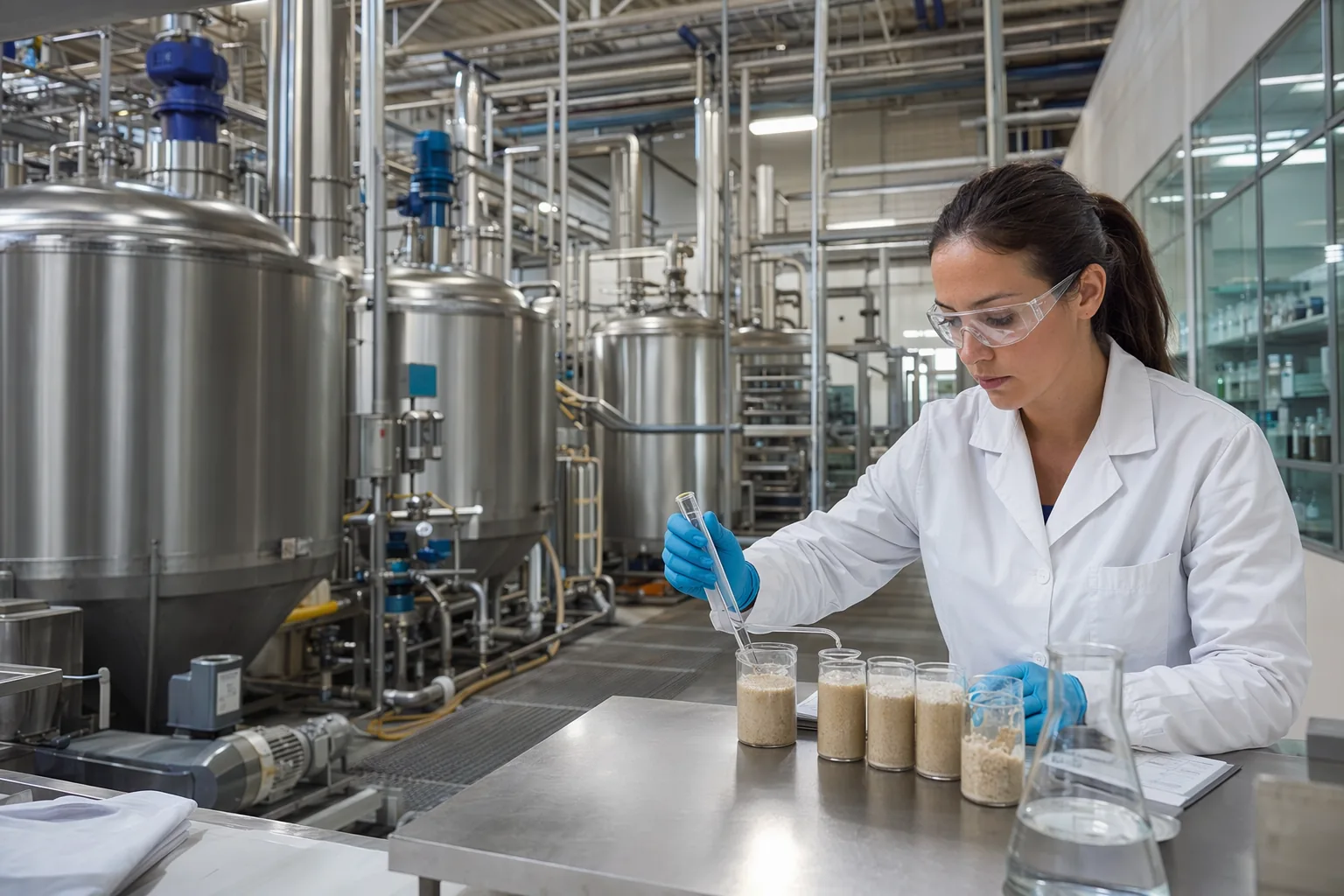
Use Glucoamylase Premium to improve starch-to-glucose conversion, stabilize fermentation feed, and troubleshoot ethanol yield losses with process-ready operating guidance.
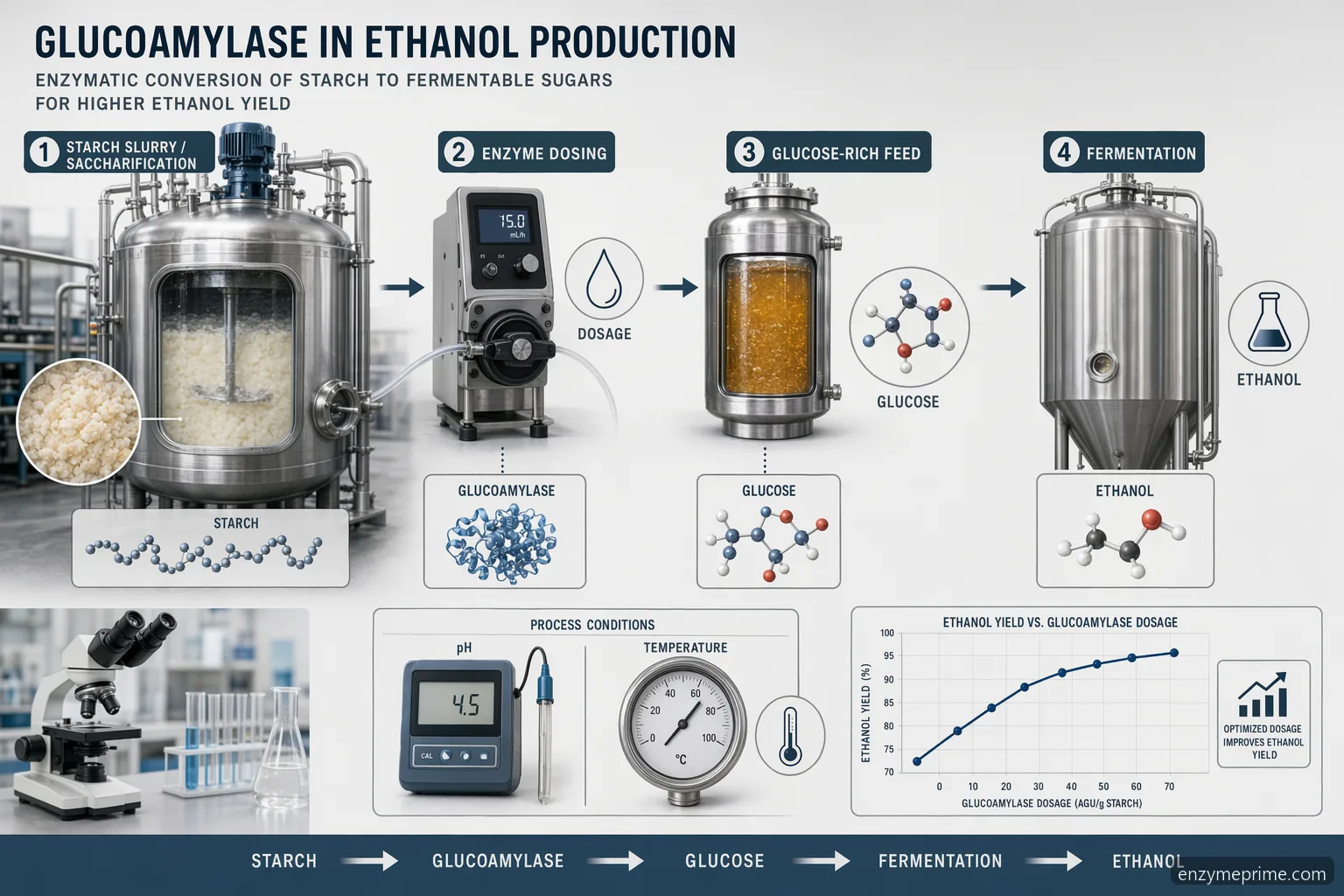
Why Glucoamylase Matters in Ethanol Production
In fuel and industrial alcohol plants, glucoamylase is the saccharification enzyme that finishes what liquefaction starts. After alpha-amylase reduces cooked starch into shorter dextrins, glucoamylase hydrolyzes alpha-1,4 and slower alpha-1,6 linkages from non-reducing ends, releasing glucose that yeast can ferment to ethanol. When the glucoamylase enzyme function is limited by pH, temperature, dosage, calcium carryover, substrate variability, or short residence time, the plant may see lower ethanol yield, higher residual sugars, incomplete attenuation, or elevated backset stress. Glucoamylase Premium is positioned for industrial buyers that need repeatable starch-to-glucose performance in corn, cassava, wheat, sorghum, or mixed-starch processes. The best result comes from matching enzyme activity to liquefaction quality, dry solids, target fermentation time, and yeast tolerance rather than relying on a fixed drum-per-batch habit.
Primary role: convert dextrins to glucose before or during fermentation. • Common pain points: residual starch, slow fermentation, high DP2-DP4 sugars, and variable ethanol yield. • Best use: validated against the plant's actual feedstock, solids, and process residence time.
Recommended Dosage Starting Points
A practical starting band for Glucoamylase Premium is typically 0.4-1.2 kg per metric ton of dry starch, or the equivalent liquid dosage based on declared activity units in the product TDS. Lower-dosage trials may work when liquefaction is clean, DE is consistent, and residence time is long. Higher dosage may be justified with high dry solids, difficult grain, incomplete liquefaction, short fermentation cycles, or strict residual carbohydrate targets. Do not compare products by kilograms alone; compare active units delivered, glucose formation rate, ethanol uplift, and total cost-in-use. For troubleshooting, run a dosage ladder at lab or pilot scale, such as 0.5x, 1.0x, and 1.5x of the current dose, while holding pH, temperature, solids, yeast pitch, and nutrient conditions constant.
Start with activity-normalized dosing from the TDS. • Validate on dry starch basis, not only mash volume. • Track glucose release, residual dextrin, fermentation rate, and ethanol yield.
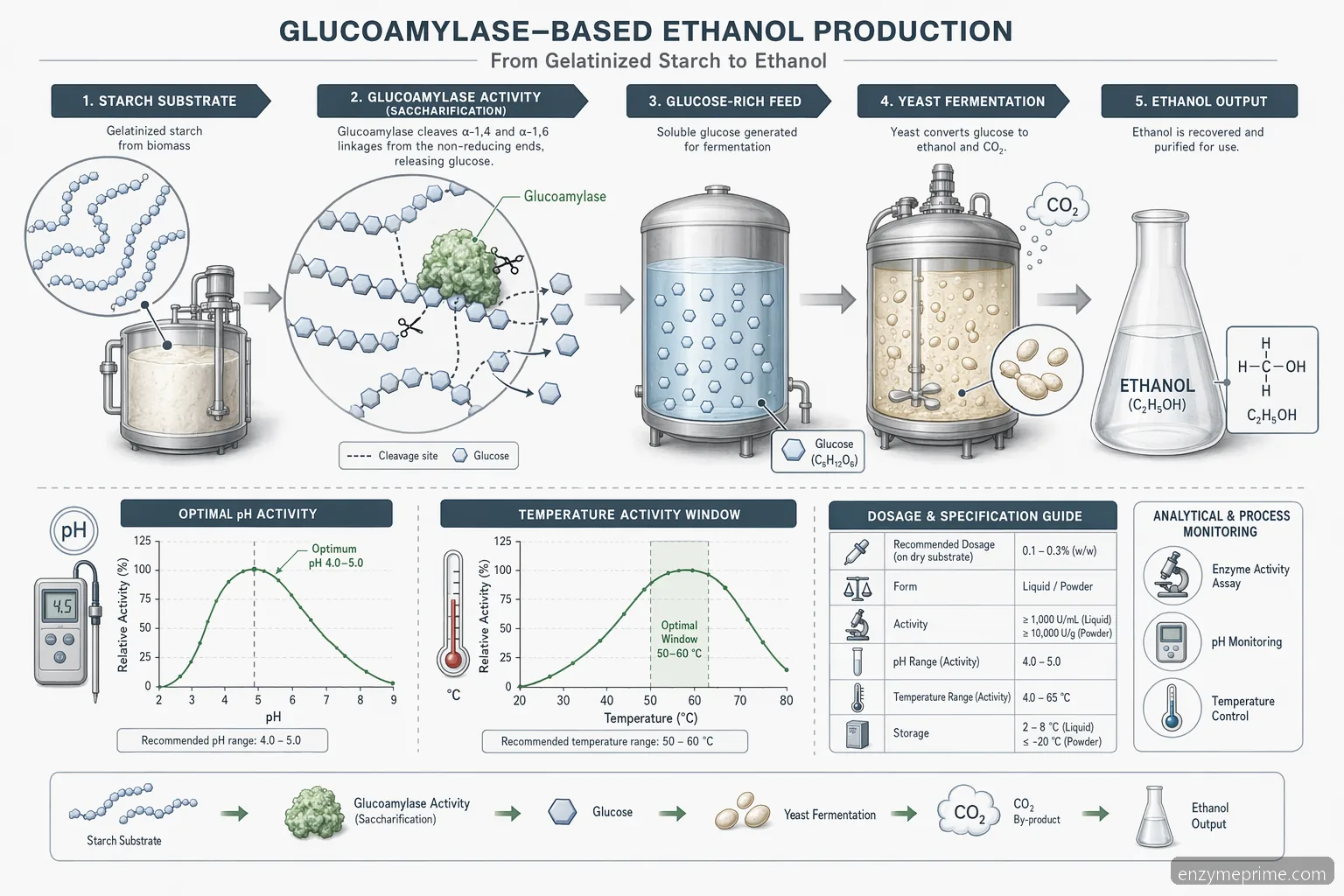
pH and Temperature Windows for Saccharification
Glucoamylase generally performs best in mildly acidic conditions. For separate saccharification before fermentation, many plants begin optimization around pH 4.0-4.5 and 55-62°C, then adjust for the specific enzyme lot, substrate, and residence time. In simultaneous saccharification and fermentation, the temperature is usually limited by yeast performance, often near 30-35°C, so the enzyme works below its faster thermal range but benefits from continuous glucose consumption by yeast. If operators ask what is glucoamylase enzyme sensitivity, the answer is that activity depends strongly on pH, temperature, time, and denaturation exposure. Overheating can reduce active enzyme; low pH or high pH can slow conversion. Confirm the applicable pH and temperature range on the TDS for Glucoamylase Premium and validate with plant mash.
Separate saccharification starting point: pH 4.0-4.5, 55-62°C. • SSF starting point: use yeast-compatible temperature and verify conversion rate. • Avoid prolonged exposure outside the TDS operating range.
Troubleshooting Low Ethanol Yield
When ethanol output drops, glucoamylase should be evaluated as part of the complete starch conversion pathway, not as an isolated additive. First confirm liquefaction quality: high viscosity, poor cook, low alpha-amylase performance, or excessive residual starch can limit the substrate available for glucoamylase. Then check saccharification pH, actual mash temperature, enzyme addition point, tank mixing, residence time, and dry solids. HPLC or equivalent carbohydrate profiling can show whether glucose is being consumed normally or whether maltose and higher dextrins remain elevated. Iodine tests, DE checks, residual starch testing, and fermentation gravity curves help separate enzyme conversion issues from yeast stress, contamination, nutrient deficiency, or inhibitor problems. The question of glucoamylase vs amylase enzyme is important: alpha-amylase liquefies starch; glucoamylase completes glucose release.
High residual dextrin suggests under-conversion or insufficient residence time. • High glucose with poor ethanol points toward yeast or contamination issues. • High viscosity often indicates upstream liquefaction problems.
Glucoamylase in Yeast Pathway and Brewing Applications
For glucoamylase for ethanol production in yeast pathway discussions, the enzyme does not replace yeast metabolism. It supplies glucose that yeast transports into the cell and converts through glycolysis to ethanol and carbon dioxide under fermentation conditions. In industrial ethanol, the target is maximum fermentable carbohydrate conversion with stable cycle time. In brewing, glucoamylase enzyme brewing applications are more selective: it may be used to increase attenuation, reduce residual dextrins, or produce a drier profile, depending on product design and local regulations. The same biochemical function applies, but the process objective differs. Ethanol plants typically optimize for yield, throughput, and cost per liter of alcohol, while brewers also evaluate flavor, body, labeling requirements, and sensory consistency.
Yeast ferments glucose; glucoamylase produces glucose from dextrins. • Ethanol plants prioritize yield and throughput. • Brewing use requires sensory and regulatory review.
Procurement, Documentation, and Scale-Up
Industrial enzyme purchasing should be based on technical fit and supply reliability, not only price per kilogram. Request the COA for lot-specific activity and basic quality results, the TDS for application range and handling guidance, and the SDS for storage, PPE, spill, and transport information. Supplier qualification should include traceable manufacturing, lot consistency, responsive technical support, packaging suitability, lead time, and the ability to support pilot validation. During trials, calculate cost-in-use by enzyme cost per ton of dry starch, ethanol uplift, residual sugar reduction, fermentation time, and any impact on utilities or downstream separation. Before plant-wide conversion, run a controlled pilot or side-by-side production trial with agreed success criteria and retained samples for investigation.
Review COA, TDS, and SDS before purchase approval. • Use pilot validation before full-scale changeover. • Compare suppliers by performance and cost-in-use, not only unit price.
Technical Buying Checklist
Buyer Questions
Glucoamylase enzyme is a saccharification enzyme used after starch liquefaction to convert dextrins into glucose. In ethanol production, that glucose becomes the fermentable sugar consumed by yeast to produce ethanol and carbon dioxide. Its performance depends on substrate quality, pH, temperature, dosage, residence time, and mixing. It is an industrial processing enzyme, not a dietary or medical supplement.
Alpha-amylase and glucoamylase work at different stages of starch conversion. Alpha-amylase rapidly liquefies gelatinized starch by cutting internal bonds, reducing viscosity and forming dextrins. Glucoamylase then works mainly from dextrin ends to release glucose. If liquefaction is poor, glucoamylase may not fully correct the issue, so both enzyme steps should be evaluated during troubleshooting.
A reasonable starting point is often 0.4-1.2 kg per metric ton of dry starch, normalized to the activity listed in the TDS. The correct dose depends on feedstock, dry solids, liquefaction quality, fermentation time, and target residual carbohydrate. Run a dosage ladder and compare glucose release, DP profile, ethanol yield, cycle time, and cost-in-use before changing production dosage.
Yes, many simultaneous saccharification and fermentation processes add glucoamylase where yeast is present. The tradeoff is temperature: yeast-compatible conditions are cooler than the enzyme's typical fastest saccharification range. This can still work well because yeast continuously consumes glucose. Validate addition point, pH, temperature, and dose with actual mash, not only water-based lab tests.
Buyers should request a certificate of analysis for lot-specific activity, a technical data sheet for operating guidance, and a safety data sheet for handling and storage. For supplier qualification, also review shelf life, packaging, traceability, lead time, trial support, and change-control communication. A pilot or side-by-side plant trial is recommended before full commercial adoption.
Related Search Themes
glucoamylase, glucoamylase enzyme, glucoamylase for ethanol production in yeast pathway, what is glucoamylase enzyme, glucoamylase vs amylase enzyme, glucoamylase enzyme function
Glucoamylase (Premium Grade) for Research & Industry
Need Glucoamylase (Premium Grade) for your lab or production process?
ISO 9001 certified · Food-grade & research-grade · Ships to 80+ countries
Frequently Asked Questions
What is glucoamylase enzyme in ethanol production?
Glucoamylase enzyme is a saccharification enzyme used after starch liquefaction to convert dextrins into glucose. In ethanol production, that glucose becomes the fermentable sugar consumed by yeast to produce ethanol and carbon dioxide. Its performance depends on substrate quality, pH, temperature, dosage, residence time, and mixing. It is an industrial processing enzyme, not a dietary or medical supplement.
How is glucoamylase vs amylase enzyme different?
Alpha-amylase and glucoamylase work at different stages of starch conversion. Alpha-amylase rapidly liquefies gelatinized starch by cutting internal bonds, reducing viscosity and forming dextrins. Glucoamylase then works mainly from dextrin ends to release glucose. If liquefaction is poor, glucoamylase may not fully correct the issue, so both enzyme steps should be evaluated during troubleshooting.
What dosage of glucoamylase should an ethanol plant test?
A reasonable starting point is often 0.4-1.2 kg per metric ton of dry starch, normalized to the activity listed in the TDS. The correct dose depends on feedstock, dry solids, liquefaction quality, fermentation time, and target residual carbohydrate. Run a dosage ladder and compare glucose release, DP profile, ethanol yield, cycle time, and cost-in-use before changing production dosage.
Can glucoamylase be added directly to fermentation?
Yes, many simultaneous saccharification and fermentation processes add glucoamylase where yeast is present. The tradeoff is temperature: yeast-compatible conditions are cooler than the enzyme's typical fastest saccharification range. This can still work well because yeast continuously consumes glucose. Validate addition point, pH, temperature, and dose with actual mash, not only water-based lab tests.
What documents should buyers request for Glucoamylase Premium?
Buyers should request a certificate of analysis for lot-specific activity, a technical data sheet for operating guidance, and a safety data sheet for handling and storage. For supplier qualification, also review shelf life, packaging, traceability, lead time, trial support, and change-control communication. A pilot or side-by-side plant trial is recommended before full commercial adoption.
Related: Buy Glucoamylase for Reliable Starch Conversion
Turn This Guide Into a Supplier Brief Request Glucoamylase Premium TDS, COA, SDS, and a pilot dosing plan for your ethanol process. See our application page for Buy Glucoamylase for Reliable Starch Conversion at /applications/buy-glucoamylase-price/ for specs, MOQ, and a free 50 g sample.
Contact Us to Contribute