How to Use Glucoamylase Premium in Glucose Syrup Formulations
Use Glucoamylase Premium for glucose syrup saccharification with practical pH, temperature, dosage, QC, and sourcing guidance.
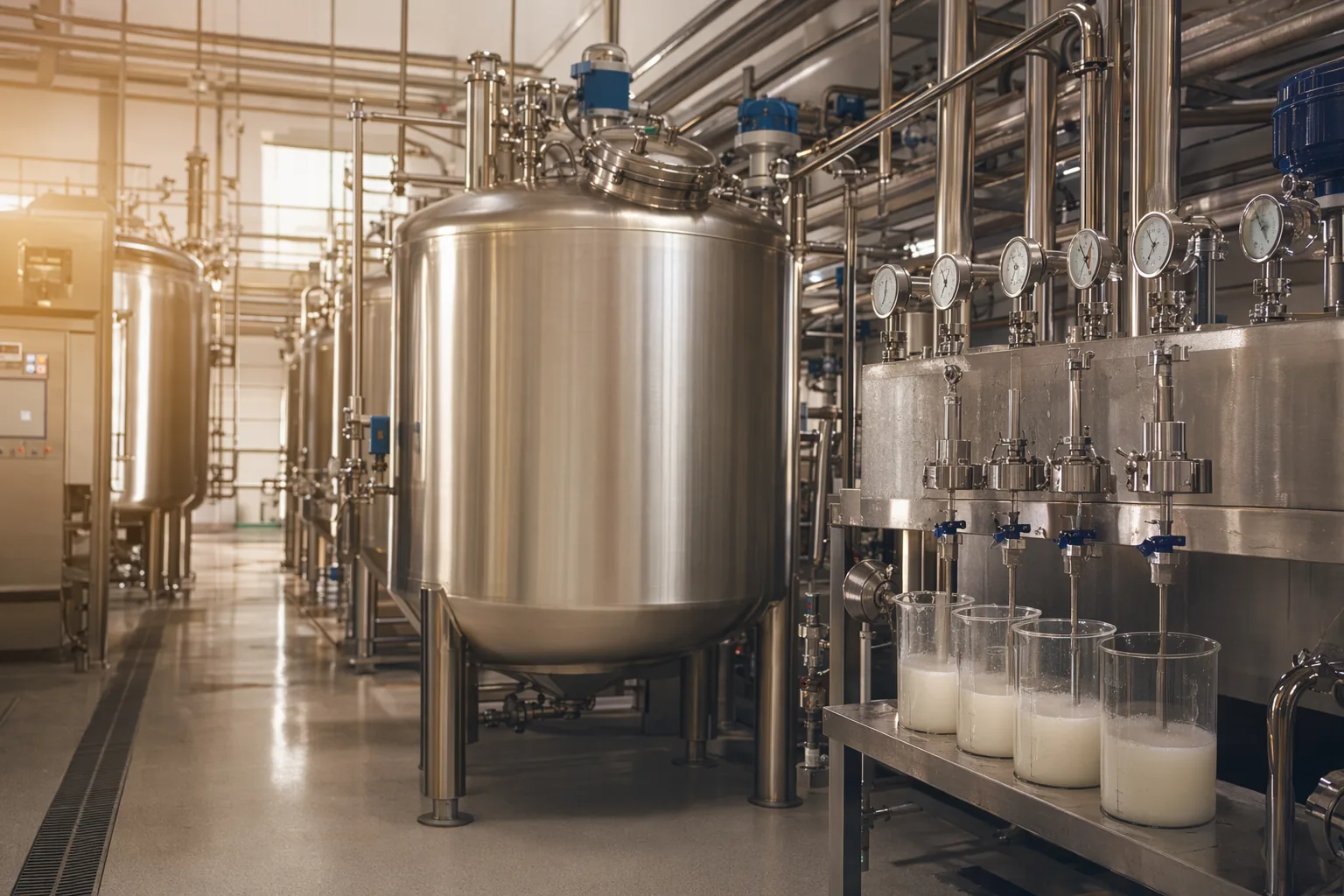
A practical B2B guide for starch processors selecting and validating glucoamylase for high-conversion glucose syrup production.
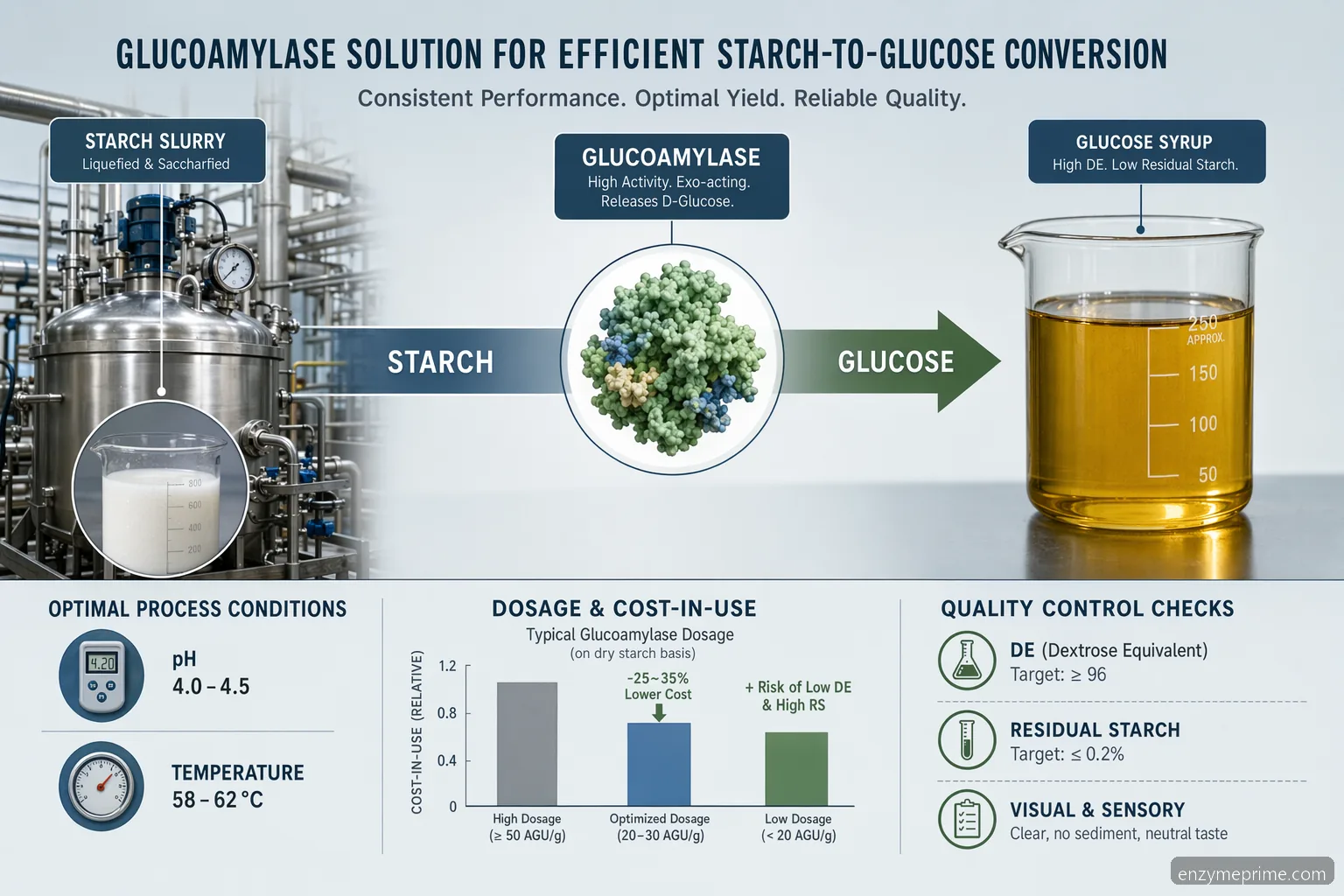
What Glucoamylase Does in Glucose Syrup Production
In industrial glucose syrup manufacture, the key glucoamylase application is saccharification after starch liquefaction. Liquefied corn, tapioca, wheat, or potato starch typically contains soluble dextrins produced by alpha-amylase. Glucoamylase enzyme, also called amyloglucosidase or AMG, releases glucose units mainly from the non-reducing ends of these dextrins by hydrolyzing alpha-1,4 glycosidic bonds and, more slowly, alpha-1,6 branch points. This answers the common buyer question: what does glucoamylase break down? It breaks down gelatinized and liquefied starch fragments into fermentable or refinery-ready glucose. Unlike maltase glucoamylase discussed in human digestion, Glucoamylase Premium is positioned for industrial formulation and processing, not medical or supplement use. The objective is a reproducible syrup profile with high dextrose equivalent, manageable viscosity, good filterability, and predictable downstream performance for glucose syrup or further isomerization.
Primary function: starch dextrin conversion to glucose • Process stage: saccharification after liquefaction • Industrial use: glucose syrup, HFCS feed syrup, and brewing adjunct conversion
Recommended Process Conditions for Saccharification
A practical starting window for Glucoamylase Premium in glucose syrup is pH 4.0–4.5 and 58–62°C, with final settings confirmed by pilot validation. Many plants adjust liquefied starch to around pH 4.2 before dosing, then hold the saccharification tank under controlled agitation for 30–48 hours depending on dry solids, liquefaction quality, enzyme activity, and target glucose level. Liquefaction DE often enters saccharification around DE 8–15; under-liquefied starch can reduce conversion efficiency, while overprocessing may increase side reactions or filtration issues. For high dry solids streams, mass transfer, viscosity, and temperature uniformity should be checked before scaling. Calcium, residual alpha-amylase conditions, and substrate source may also influence final syrup composition. The application of glucoamylase should be validated against your plant’s actual starch, evaporator load, refining sequence, and downstream customer specification.
Starting pH: 4.0–4.5 • Starting temperature: 58–62°C • Typical hold time: 30–48 hours • Common feed: liquefied starch at approximately DE 8–15
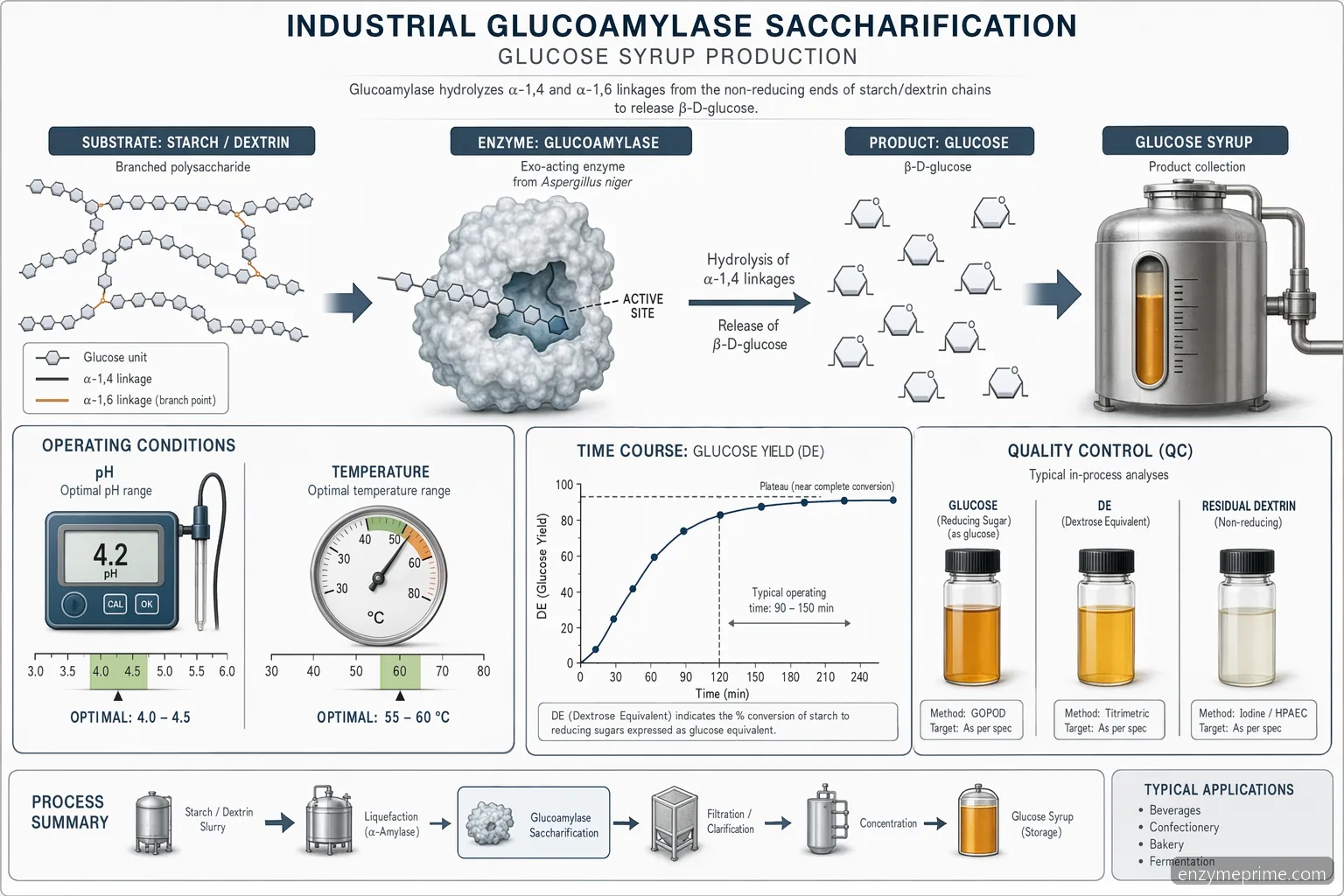
Dosage Optimization and Cost-in-Use
Dosage is best defined by enzyme activity, dry starch basis, residence time, and target glucose profile rather than by a universal addition rate. As an initial screening band, processors may evaluate 0.3–1.2 kg of commercial glucoamylase preparation per metric ton of dry starch, then refine dosage after bench and pilot trials. Lower dosage may be economical if residence time is available; higher dosage may support faster conversion where tank capacity is constrained. Cost-in-use should compare enzyme cost against dextrose yield, batch time, steam demand, rework risk, filtration performance, and downstream refining losses. Buyers should ask the supplier for the TDS to confirm activity units and recommended handling, the COA for batch-specific quality attributes, and the SDS for safe storage and plant handling. The lowest price per kilogram is not always the lowest cost per ton of syrup solids.
Model dosage on dry starch and activity units • Compare enzyme spend with conversion time and yield • Request COA, TDS, and SDS before approval • Validate at bench, pilot, and production scale
Quality Control Checks During and After Conversion
Quality control should confirm that the glucoamylase application is delivering the intended saccharification curve and final syrup specification. Typical in-process checks include pH, temperature, dry solids, DE development, iodine response for residual starch or long dextrins, and viscosity trend. Final syrup evaluation often includes dextrose by HPLC or equivalent carbohydrate profiling, DE, ash, color, clarity, filterability, microbial control parameters, and sensory-neutral odor where relevant. If the syrup will feed high fructose corn syrup production, confirm suitability for isomerization, including glucose concentration, impurity profile, and absence of process upsets that could affect the next enzyme step. Retain batch records linking enzyme lot number, dosage, saccharification time, and analytical results. This data supports supplier qualification, troubleshooting, and continuous improvement in large-volume starch processing.
Monitor pH, temperature, dry solids, DE, and viscosity • Use HPLC or validated methods for glucose profile • Check iodine response for incomplete conversion • Link enzyme lot data to production performance
Supplier Qualification for Industrial Enzyme Buyers
For B2B procurement, glucoamylase selection should combine technical fit, documentation, supply reliability, and total operating value. A qualified supplier should provide current COA, TDS, and SDS documents, clear activity definitions, recommended storage conditions, shelf-life guidance, allergen or carrier information where applicable, and support for pilot validation. Review batch-to-batch consistency, packaging compatibility, lead time, and responsiveness during process troubleshooting. Avoid relying only on broad claims such as premium or high performance; request data that connects the glucoamylase enzyme to your substrate, pH, temperature, and syrup targets. A structured trial should include a control enzyme, at least two dosage levels, carbohydrate profile over time, and final filtration observations. This approach helps convert formulation intent into a reliable commercial specification for glucose syrup production.
Confirm activity method and batch COA values • Review TDS handling, storage, and process guidance • Use pilot data before changing production specifications • Assess supply reliability and technical support quality
Technical Buying Checklist
Buyer Questions
Glucoamylase enzyme is an industrial saccharification enzyme used after starch liquefaction. It hydrolyzes soluble dextrins into glucose, helping processors produce high-DE glucose syrup with a defined carbohydrate profile. In this context, what is glucoamylase is best answered as a process enzyme for starch conversion, not a dietary or medical ingredient.
Glucoamylase releases glucose from the non-reducing ends of liquefied starch dextrins. It acts mainly on alpha-1,4 bonds and more slowly on alpha-1,6 branch points. In glucose syrup production, this reduces dextrin content, increases dextrose equivalent, and supports downstream refining or isomerization when the process is properly controlled.
Start with a controlled screening band, such as 0.3–1.2 kg per metric ton of dry starch, if consistent with the supplier TDS. Then optimize by enzyme activity, dry solids, liquefaction DE, target glucose profile, available tank time, and filtration results. Pilot validation is essential before changing a production formulation.
Industrial enzyme buyers should request a batch COA, current TDS, and SDS. The COA supports batch quality review, the TDS explains activity, dosage guidance, storage, and process conditions, and the SDS covers safe handling. These documents should be reviewed alongside pilot data, supplier qualification records, and cost-in-use analysis.
Yes, glucose syrup produced with glucoamylase is commonly used as feed for isomerization when it meets the required glucose concentration and impurity profile. The saccharification step should be controlled for DE, carbohydrate composition, color, ash, and filtration. Always validate compatibility with the downstream isomerization process and final customer specification.
Glucoamylase (Premium Grade) for Research & Industry
Need Glucoamylase (Premium Grade) for your lab or production process?
ISO 9001 certified · Food-grade & research-grade · Ships to 80+ countries
Frequently Asked Questions
What is glucoamylase enzyme in glucose syrup processing?
Glucoamylase enzyme is an industrial saccharification enzyme used after starch liquefaction. It hydrolyzes soluble dextrins into glucose, helping processors produce high-DE glucose syrup with a defined carbohydrate profile. In this context, what is glucoamylase is best answered as a process enzyme for starch conversion, not a dietary or medical ingredient.
What does glucoamylase do during saccharification?
Glucoamylase releases glucose from the non-reducing ends of liquefied starch dextrins. It acts mainly on alpha-1,4 bonds and more slowly on alpha-1,6 branch points. In glucose syrup production, this reduces dextrin content, increases dextrose equivalent, and supports downstream refining or isomerization when the process is properly controlled.
How should I set dosage for a glucoamylase application?
Start with a controlled screening band, such as 0.3–1.2 kg per metric ton of dry starch, if consistent with the supplier TDS. Then optimize by enzyme activity, dry solids, liquefaction DE, target glucose profile, available tank time, and filtration results. Pilot validation is essential before changing a production formulation.
Which documents should buyers request before approval?
Industrial enzyme buyers should request a batch COA, current TDS, and SDS. The COA supports batch quality review, the TDS explains activity, dosage guidance, storage, and process conditions, and the SDS covers safe handling. These documents should be reviewed alongside pilot data, supplier qualification records, and cost-in-use analysis.
Can glucoamylase be used for high fructose corn syrup feed?
Yes, glucose syrup produced with glucoamylase is commonly used as feed for isomerization when it meets the required glucose concentration and impurity profile. The saccharification step should be controlled for DE, carbohydrate composition, color, ash, and filtration. Always validate compatibility with the downstream isomerization process and final customer specification.
Related: Buy Glucoamylase for Reliable Starch Conversion
Turn This Guide Into a Supplier Brief Request Glucoamylase Premium TDS, COA, SDS, and a pilot trial plan for your glucose syrup line. See our application page for Buy Glucoamylase for Reliable Starch Conversion at /applications/buy-glucoamylase-price/ for specs, MOQ, and a free 50 g sample.
Contact Us to Contribute