Glucoamylase Premium for Industrial Production
Buy Glucoamylase Premium for starch saccharification, glucose syrup, HFCS and brewing. Compare specs, dosing, COA/TDS/SDS and pilot validation.
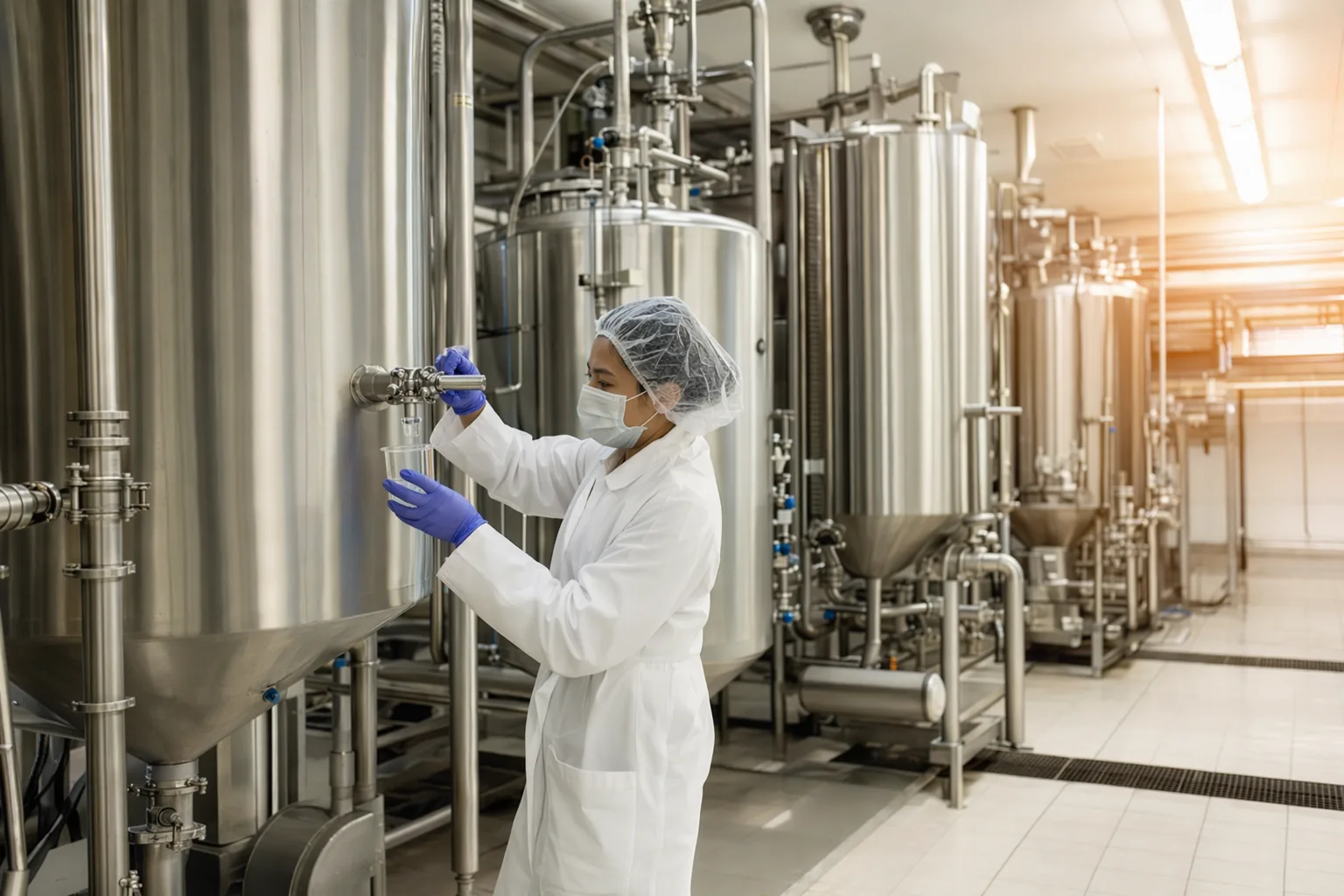
A buyer-focused guide to selecting, validating and dosing glucoamylase enzyme for reliable starch-to-glucose conversion in food, beverage and fermentation processes.
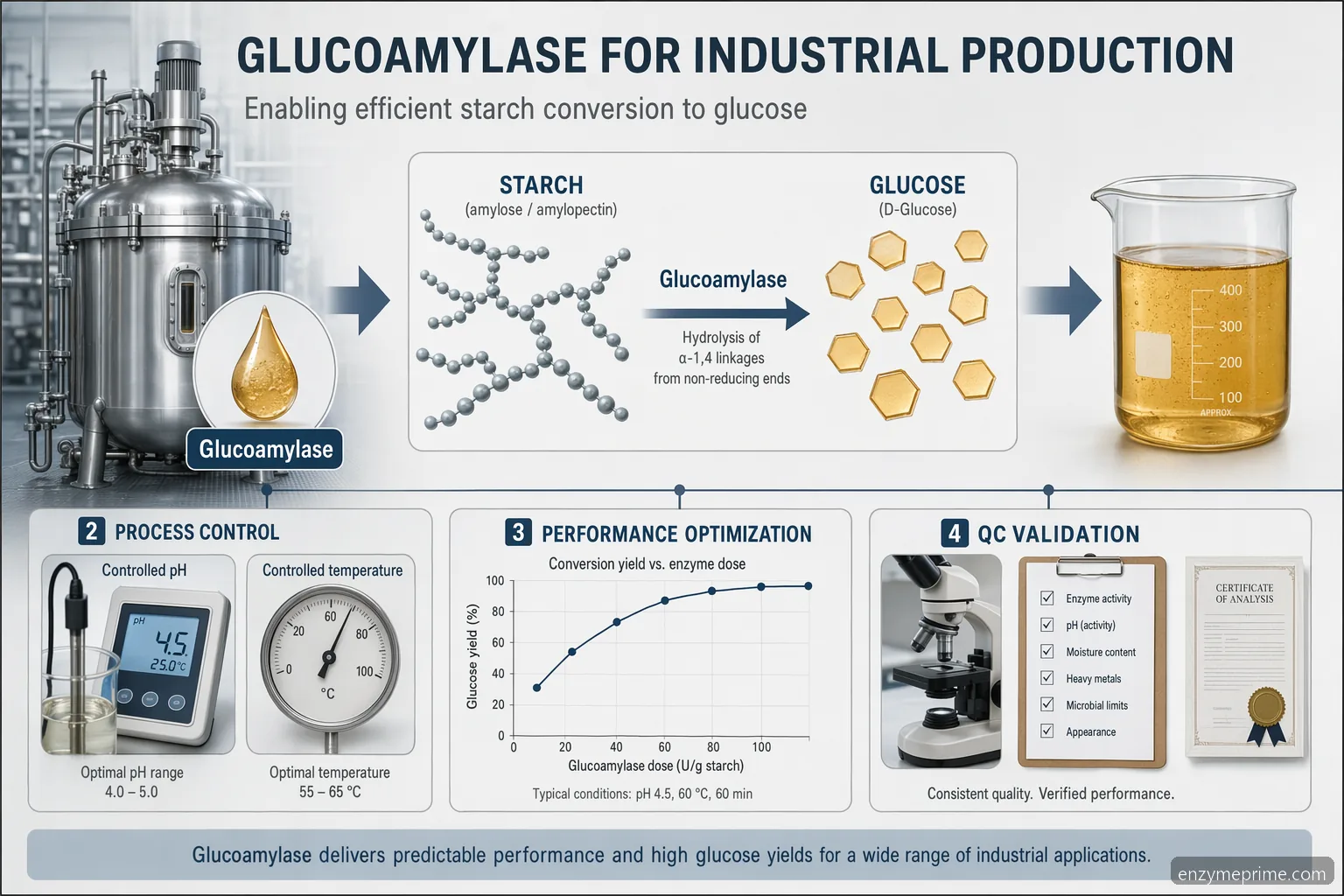
What Is Glucoamylase and What Does It Do?
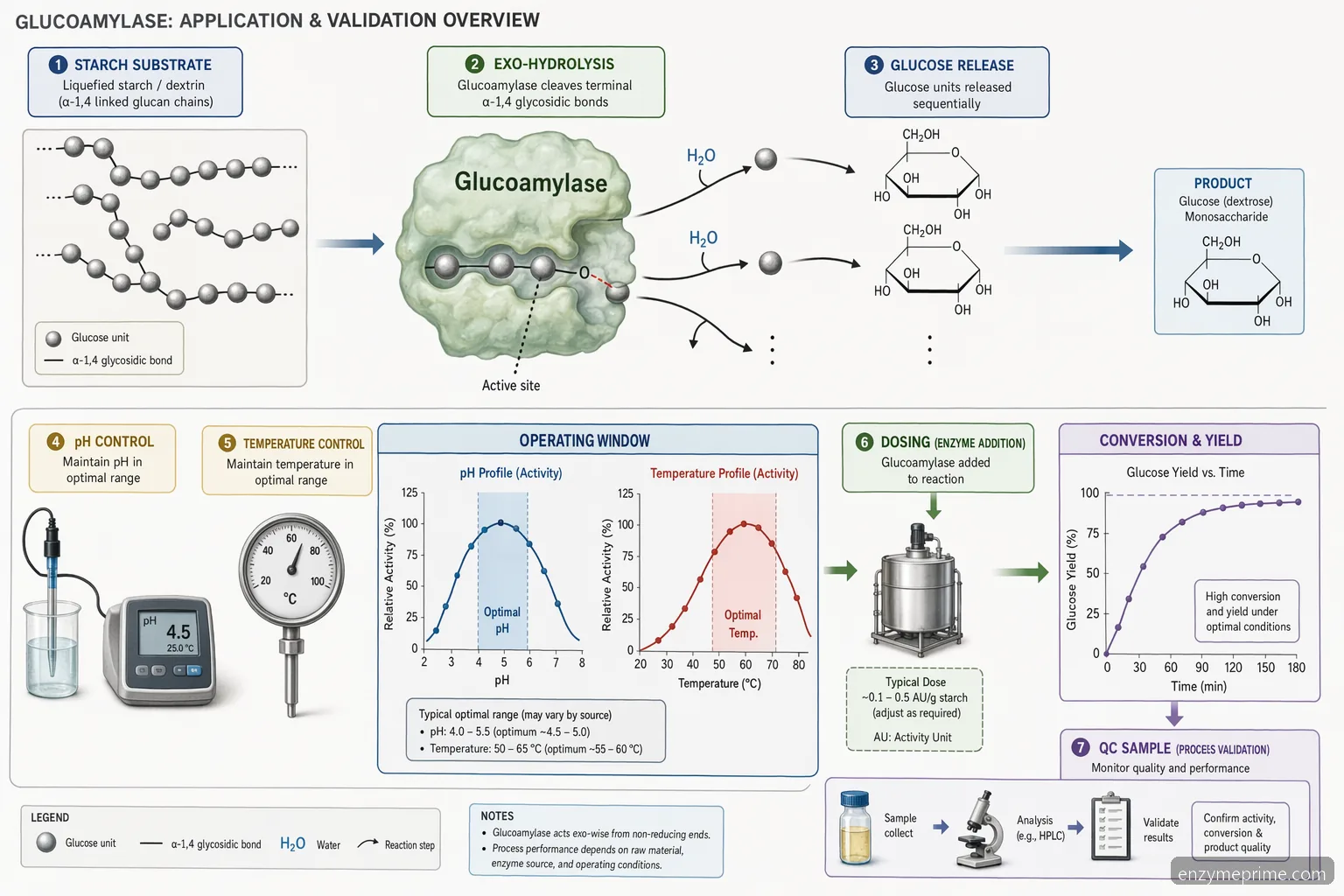
Glucoamylase is a saccharification enzyme used after starch liquefaction to hydrolyze alpha-1,4 and, more slowly, alpha-1,6 glucosidic bonds from the non-reducing ends of dextrins. In practical production terms, the glucoamylase enzyme converts liquefied starch into glucose, raising dextrose equivalent and improving fermentable sugar yield. For buyers searching what is glucoamylase or what does glucoamylase do, the key point is process value: it helps transform corn, wheat, cassava, potato or other starch streams into glucose syrup, high fructose corn syrup feedstock, brewing wort adjunct sugars or ethanol fermentation substrates. Glucoamylase Premium is positioned for industrial saccharification where consistency, activity retention and process compatibility matter. It is normally paired with alpha-amylase in a two-step starch conversion process, making amylase and glucoamylase production workflows more efficient when enzyme selection is matched to pH, temperature, dry solids and target sugar profile.
Primary role: starch to glucose enzyme for saccharification • Used after liquefaction by alpha-amylase • Supports glucose syrup, HFCS, brewing and ethanol applications • Performance depends on substrate, pH, temperature and dosage
Recommended Production Conditions
For most starch-based production, glucoamylase is added after liquefaction when the mash has been cooled and adjusted to an acidic saccharification range. A common operating window is pH 4.0–4.5 and 58–62°C, although exact settings should follow the product TDS and pilot results. Typical dosage screening may start around 0.4–1.0 kg per metric ton of dry starch or an equivalent activity-based addition rate, then be refined against target DE, glucose content, cycle time and cost-in-use. High dry solids, unusual starch sources, short residence time or inhibitors from process water may require dosage adjustment. In brewing, lower treatment rates and process-specific temperature profiles are often used to increase fermentability without over-thinning body. For glucoamylase enzyme ethanol production, the enzyme may be applied during saccharification or simultaneous saccharification and fermentation, depending on yeast tolerance, temperature and contamination control strategy.
Typical pH: 4.0–4.5 for fungal glucoamylase saccharification • Typical temperature: 58–62°C, subject to product specification • Screen dosage by activity, dry solids and DE target • Verify performance in real plant substrate, not only buffer assays
Applications: Syrup, HFCS, Brewing and Ethanol
In glucose syrup production, glucoamylase production planning focuses on reaching the specified dextrose level while controlling color, filtration load and downstream evaporation efficiency. For high fructose corn syrup, the enzyme prepares a high-glucose feed suitable for subsequent isomerization, so residual oligosaccharides and side activity profiles should be monitored. In brewing, glucoamylase can increase fermentable extract from adjuncts or specialty mashes, but dosing should be aligned with attenuation and flavor targets. For glucoamylase for ethanol production in yeast pathway discussions, the enzyme is not part of the yeast metabolic pathway itself; instead, it releases glucose that yeast can ferment to ethanol. In glucoamylase enzyme ethanol production, buyers should evaluate enzyme activity at fermentation pH, compatibility with protease or cellulase blends, and the temperature gap between optimal saccharification and viable yeast fermentation conditions.
Glucose syrup: target DE and glucose percentage • HFCS: prepare consistent glucose-rich feed for isomerization • Brewing: adjust fermentability and attenuation • Ethanol: release glucose for yeast fermentation
Quality Control and Documentation Buyers Should Require
A qualified glucoamylase supplier should provide a current COA for each lot, a TDS with activity definition and application guidance, and an SDS for safe handling and storage. The COA should identify batch number, enzyme activity, appearance, recommended storage conditions and relevant microbiological or chemical limits where applicable. Because activity units vary by assay method, buyers should not compare products on unit number alone without understanding pH, temperature, substrate and endpoint of the assay. Useful production QC checks include DE by titration or equivalent method, glucose by HPLC or enzymatic kit, residual starch by iodine test, pH, dry solids, viscosity, microbial load and sensory checks where food or beverage use applies. Retain samples from incoming lots and pilot trials so performance questions can be investigated with evidence rather than assumptions.
Request COA, TDS and SDS before purchase approval • Confirm activity method and unit definition • Track DE, glucose, residual starch, pH and dry solids • Keep retained samples for lot-to-lot comparison
Supplier Qualification and Cost-in-Use Evaluation
For B2B buyers, the lowest price per kilogram is rarely the best measure of value. Glucoamylase production economics should be assessed by cost-in-use: enzyme dose, saccharification time, glucose yield, rework rate, energy profile, downstream filtration or evaporation impact, and batch consistency. Before scale-up, request a representative sample, technical recommendation and pilot protocol using your starch source, dry solids level, pH control and residence time. Compare at least two dosage points against your current enzyme or process target. Supplier qualification should also review lead time, packaging options, shelf-life statement, storage conditions, change notification practices, documentation response and technical support availability. Avoid accepting unverifiable performance claims without plant or pilot data. A dependable supplier helps you convert laboratory results into stable production parameters and supports troubleshooting when raw material or process conditions shift.
Evaluate cost per ton of dry starch converted • Run pilot validation before plant-wide changeover • Review lead time, packaging and storage requirements • Prioritize documented consistency over headline activity claims
Note on Glucoamylase Production by Microbial Culture
Some technical searches, such as production of glucoamylase by Rhizopus sp in liquid culture, refer to manufacturing the enzyme itself by microbial fermentation rather than using commercial glucoamylase in a starch plant. That research field studies organism selection, medium design, aeration, pH, temperature, downstream recovery and activity optimization. Industrial enzyme buyers usually do not need to manufacture glucoamylase on site; they need a reliable formulated enzyme with documented activity, handling guidance and reproducible process performance. However, understanding enzyme origin can help in supplier discussions about formulation, stability and application fit. If your procurement team is comparing commercial options, focus on the delivered product specification, not only the production organism. Ask whether the supplier can support application trials, provide lot documentation and explain how storage or transport conditions affect activity over the stated shelf life.
Research production is different from plant application • Commercial buyers should focus on delivered activity and stability • Origin can inform formulation and compatibility questions • Application data is more useful than organism claims alone
Technical Buying Checklist
Buyer Questions
Glucoamylase is used to convert liquefied starch dextrins into glucose during saccharification. In production, it supports glucose syrup, high fructose corn syrup feed preparation, brewing fermentability adjustment and ethanol substrate preparation. It is normally applied after alpha-amylase liquefaction, when pH and temperature are adjusted to suit the enzyme and the desired glucose yield.
A practical screening range is often about 0.4–1.0 kg per metric ton of dry starch, or an equivalent activity-based dose from the supplier’s TDS. Final dosage depends on starch source, dry solids, liquefaction quality, pH, temperature, residence time and target DE. Run bench trials first, then pilot validation before changing full-scale production.
For industrial purchasing, request a COA, TDS and SDS. The COA should show batch identity and activity results. The TDS should define activity units, operating pH and temperature guidance, dosage recommendations and storage conditions. The SDS supports handling and safety review. These documents are essential for supplier qualification, incoming QC and audit-ready procurement records.
Yes. Glucoamylase releases glucose from starch-derived dextrins, and yeast can then ferment that glucose to ethanol. The enzyme is not part of the yeast pathway itself, but it supplies fermentable sugar. For ethanol plants, evaluate activity at process pH, compatibility with other enzymes, contamination controls and whether saccharification occurs separately or during simultaneous saccharification and fermentation.
Compare them in your actual substrate under the same pH, temperature, dry solids and residence time. Measure glucose yield, DE, residual starch, viscosity, filtration behavior, cycle time and required dosage. Also review COA consistency, activity method, shelf-life, packaging, lead time and technical support. The best choice is the enzyme with the lowest reliable cost-in-use.
Related Search Themes
glucoamylase, glucoamylase enzyme, production of glucoamylase by rhizopus sp in liquid culture, glucoamylase for ethanol production in yeast pathway, glucoamylase enzyme ethanol production, amylase and glucoamylase production
Glucoamylase (Premium Grade) for Research & Industry
Need Glucoamylase (Premium Grade) for your lab or production process?
ISO 9001 certified · Food-grade & research-grade · Ships to 80+ countries
Frequently Asked Questions
What is glucoamylase used for in production?
Glucoamylase is used to convert liquefied starch dextrins into glucose during saccharification. In production, it supports glucose syrup, high fructose corn syrup feed preparation, brewing fermentability adjustment and ethanol substrate preparation. It is normally applied after alpha-amylase liquefaction, when pH and temperature are adjusted to suit the enzyme and the desired glucose yield.
How should I dose glucoamylase enzyme in a starch plant?
A practical screening range is often about 0.4–1.0 kg per metric ton of dry starch, or an equivalent activity-based dose from the supplier’s TDS. Final dosage depends on starch source, dry solids, liquefaction quality, pH, temperature, residence time and target DE. Run bench trials first, then pilot validation before changing full-scale production.
What documents should a glucoamylase supplier provide?
For industrial purchasing, request a COA, TDS and SDS. The COA should show batch identity and activity results. The TDS should define activity units, operating pH and temperature guidance, dosage recommendations and storage conditions. The SDS supports handling and safety review. These documents are essential for supplier qualification, incoming QC and audit-ready procurement records.
Can glucoamylase be used for ethanol production with yeast?
Yes. Glucoamylase releases glucose from starch-derived dextrins, and yeast can then ferment that glucose to ethanol. The enzyme is not part of the yeast pathway itself, but it supplies fermentable sugar. For ethanol plants, evaluate activity at process pH, compatibility with other enzymes, contamination controls and whether saccharification occurs separately or during simultaneous saccharification and fermentation.
How do I compare two glucoamylase products?
Compare them in your actual substrate under the same pH, temperature, dry solids and residence time. Measure glucose yield, DE, residual starch, viscosity, filtration behavior, cycle time and required dosage. Also review COA consistency, activity method, shelf-life, packaging, lead time and technical support. The best choice is the enzyme with the lowest reliable cost-in-use.
Related: Buy Glucoamylase for Reliable Starch Conversion
Turn This Guide Into a Supplier Brief Request Glucoamylase Premium TDS, COA, SDS and a pilot validation sample for your production line. See our application page for Buy Glucoamylase for Reliable Starch Conversion at /applications/buy-glucoamylase-price/ for specs, MOQ, and a free 50 g sample.
Contact Us to Contribute