Glucoamylase Enzyme For Sale for Glucose Syrup Saccharification
Buy Glucoamylase Premium for glucose syrup troubleshooting. See dosage, pH, temperature, QC checks, COA/TDS/SDS, and pilot validation.
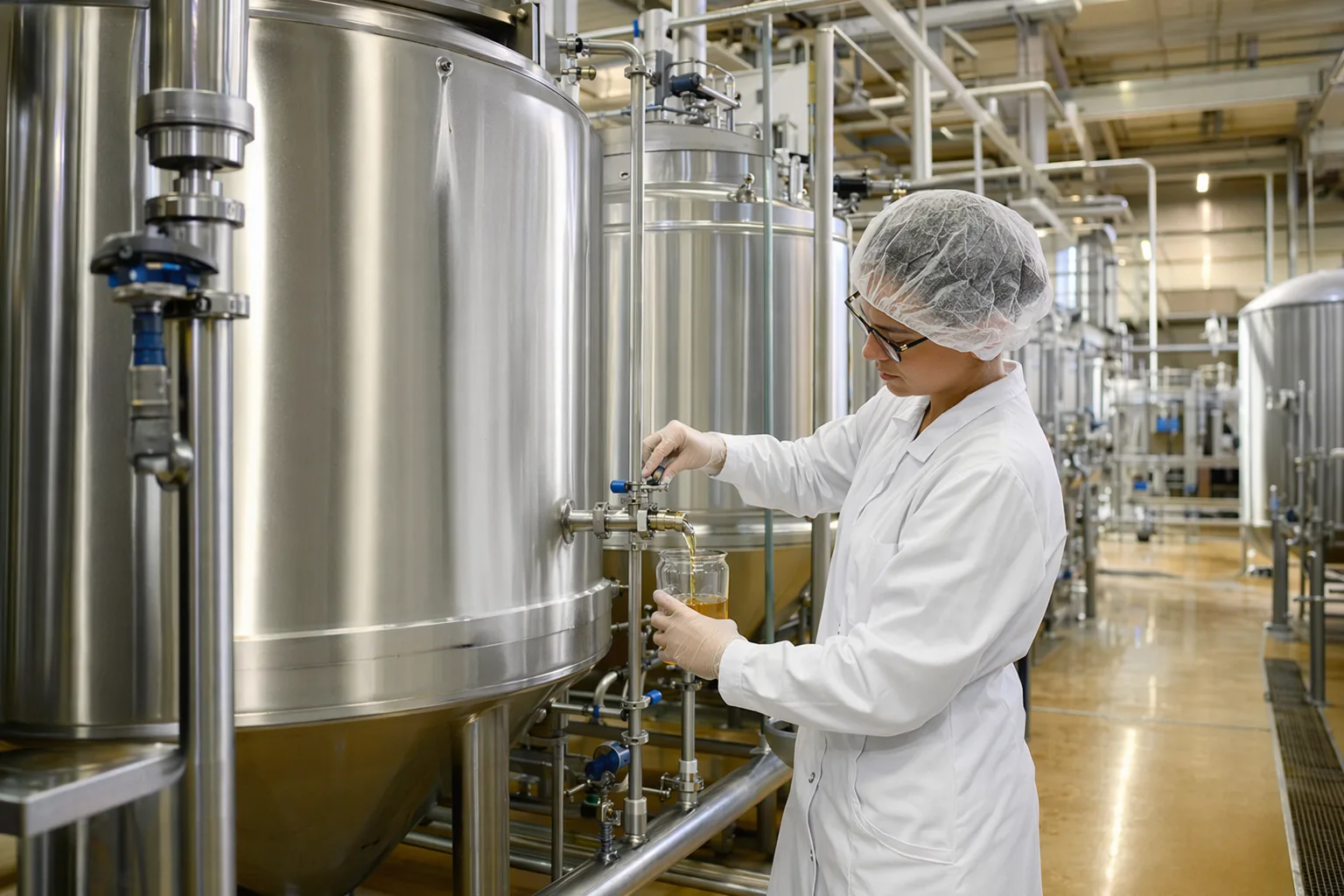
Glucoamylase Premium is an industrial saccharification enzyme for starch processors seeking stable glucose yield, cleaner troubleshooting, and practical cost-in-use control.
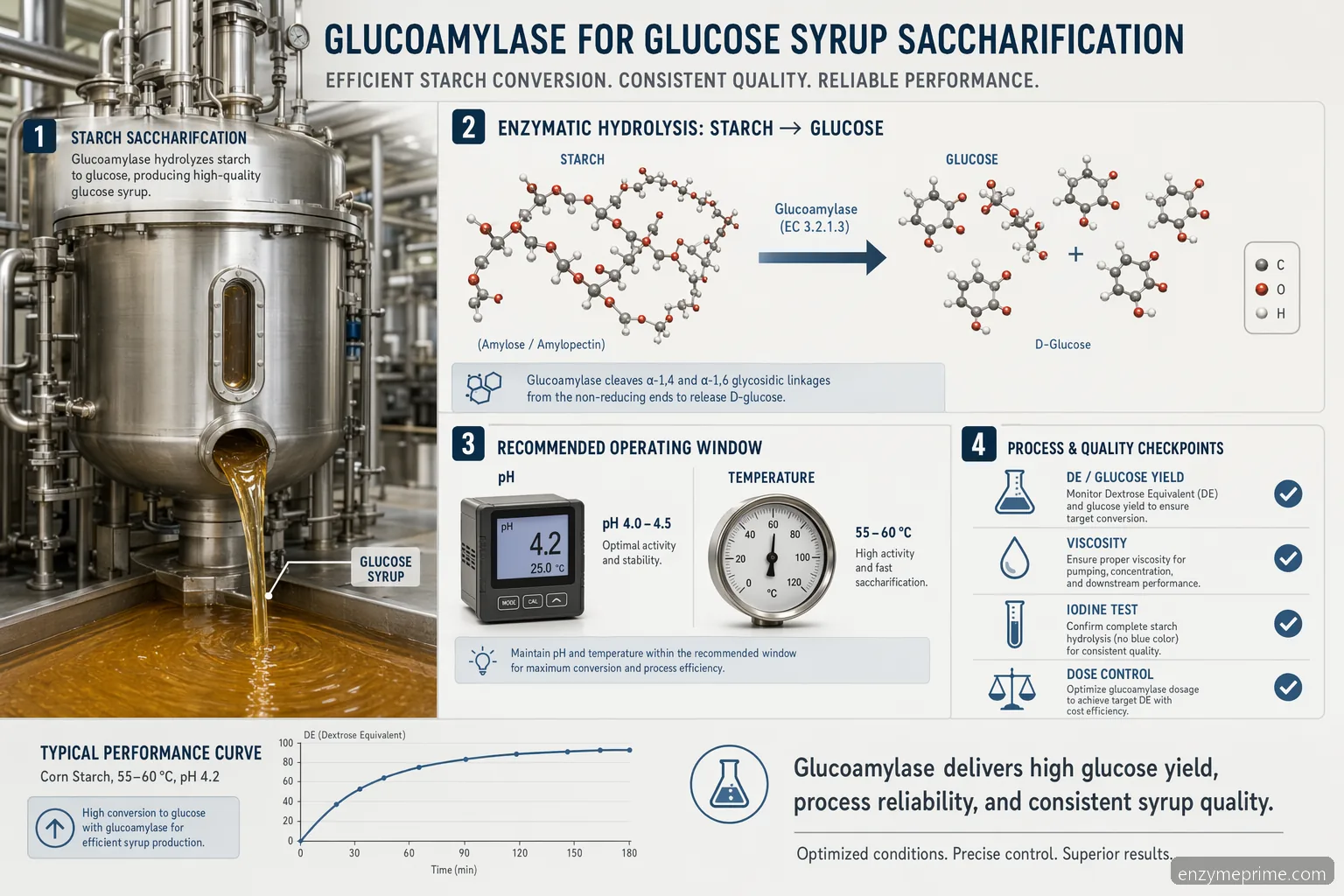
Troubleshooting Saccharification in Glucose Syrup
If glucose yield is drifting, saccharification time is extending, or final DE is below target, the problem is often a combination of substrate condition, pH control, thermal profile, and enzyme dose. Glucoamylase Premium is positioned for industrial buyers searching for glucoamylase enzyme for sale when they need a practical starch to glucose enzyme for routine production and troubleshooting. In glucose syrup plants, the enzyme is added after starch liquefaction, when alpha-amylase has reduced viscosity and created dextrin chains suitable for saccharification. The goal is controlled conversion, not simply adding more enzyme. Before changing dose, confirm liquefaction DE, dry solids, calcium carryover, pH meter calibration, tank mixing, temperature uniformity, and hold time. A supplier should help interpret process data and run side-by-side trials against the current saccharification enzyme.
Confirm liquefaction quality before adjusting glucoamylase dosage. • Track DE increase over time, not only final glucose concentration. • Check pH and temperature at tank level, not only at the control panel. • Compare cost per ton of syrup solids, not cost per kilogram of enzyme.
Recommended Dosage, pH, and Temperature Window
A practical starting point for Glucoamylase Premium in glucose syrup is 0.40-1.20 kg per metric ton of dry starch, then refine through pilot validation. Lower dosages may work with clean liquefaction, moderate dry solids, and longer residence time. Higher dosages may be justified when the process targets high glucose, short batch cycles, or variable starch quality. Typical saccharification conditions are pH 4.0-4.5 and 58-62°C. Many plants operate near pH 4.2 and 60°C, but the best set point depends on substrate, tank design, residence time, and microbial risk. Avoid prolonged exposure above the recommended temperature window unless the TDS supports it, because thermal stress can reduce active enzyme. For continuous systems, establish a dosage curve at different flow rates and confirm glucose yield with HPLC or validated reducing sugar methods.
Starting dosage: 0.40-1.20 kg per metric ton of dry starch. • Typical pH: 4.0-4.5, adjusted after liquefaction and cooling. • Typical temperature: 58-62°C for saccharification. • Validate final settings with plant-specific trials.
What Is Glucoamylase Enzyme Function?
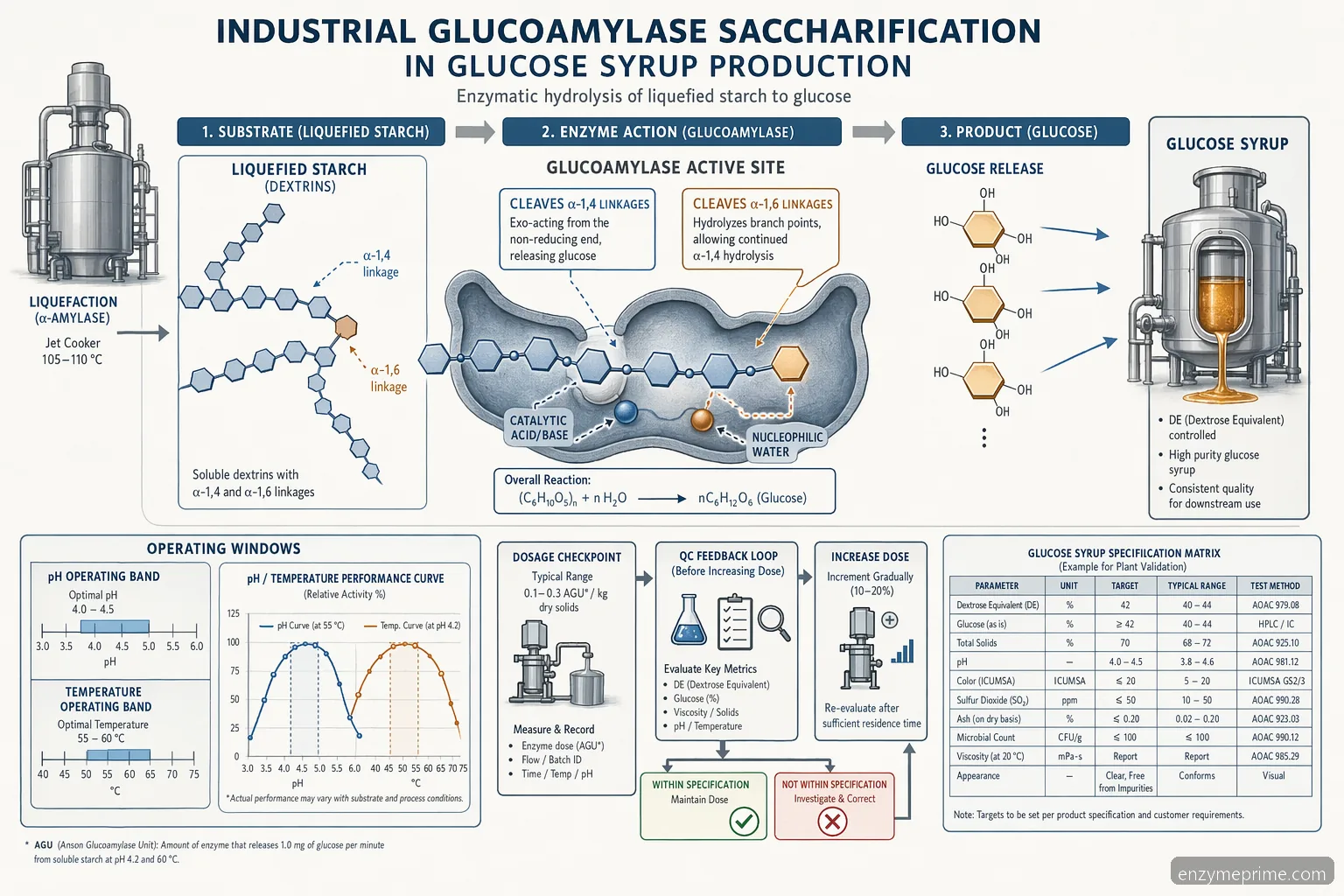
For buyers asking what is glucoamylase enzyme and why it matters, the core function is hydrolyzing alpha-1,4 and, more slowly, alpha-1,6 glucosidic bonds from the non-reducing ends of starch dextrins. This produces glucose and helps drive high-DE syrup production after liquefaction. In simple terms, alpha-amylase reduces viscosity and creates shorter dextrins, while glucoamylase finishes the conversion toward glucose. This difference is central to the glucoamylase vs amylase enzyme decision: they are usually complementary, not interchangeable. In glucose syrup, a weak or mismatched glucoamylase may leave residual dextrin, slow filtration, or require longer saccharification residence time. Glucoamylase Premium should be evaluated against measurable targets such as final glucose percentage, residual DP2/DP3 profile, color development, ash impact, and downstream isomerization suitability if the syrup is intended for high fructose corn syrup.
Glucoamylase releases glucose from dextrin chain ends. • Alpha-amylase is normally used earlier for liquefaction. • Residual dextrin can indicate insufficient enzyme activity or poor process control. • HPLC carbohydrate profiling gives stronger insight than DE alone.
QC Checks Before Increasing Enzyme Dose
Adding more glucoamylase enzyme is not always the lowest-cost fix. First, verify that pH adjustment after liquefaction is complete and that the acid addition point is well mixed. A pH gradient can deactivate part of the enzyme or slow conversion in zones of the tank. Next, confirm that the mash has cooled from liquefaction to the saccharification range before dosing. Review dry solids, because high DS can create mixing limitations and apparent underperformance. Check that the enzyme storage area follows the TDS, with containers sealed and protected from excessive heat. For each batch, collect timed samples for DE, glucose, residual dextrin, pH, temperature, and microbial indicators. If performance changes after a raw material switch, ask for a pilot comparison using the actual starch source and plant water chemistry.
Calibrate pH probes and lab meters on a defined schedule. • Sample at consistent residence times for fair batch comparison. • Confirm enzyme is not exposed to liquefaction temperatures. • Review storage temperature and first-in, first-out handling.
Supplier Qualification for Industrial Buyers
When evaluating glucoamylase for sale, procurement, QA, and production teams should qualify both the product and the supplier. Request a current Certificate of Analysis, Technical Data Sheet, and Safety Data Sheet before plant use. The COA should identify batch number, activity or specification basis, appearance, and release criteria relevant to your purchasing agreement. The TDS should provide application guidance, handling, storage, dosage range, and operating conditions. The SDS should support safe receiving, storage, spill response, and worker handling procedures. Also ask how batch-to-batch consistency is monitored and how technical support will assist during commissioning or troubleshooting. Avoid selecting only by headline activity or price per kilogram. A concentrated enzyme that improves yield, shortens residence time, or reduces rework may deliver a lower cost-in-use than a cheaper alternative.
Request COA, TDS, and SDS before approval. • Run a pilot or plant trial before full conversion. • Evaluate cost-in-use per ton of dry starch or syrup solids. • Confirm lead time, packaging, shelf life, and technical support.
Pilot Validation Plan for Glucose Syrup Plants
A good validation trial defines the baseline before testing Glucoamylase Premium. Record starch source, liquefaction enzyme and conditions, liquefaction DE, dry solids, pH, temperature, tank volume, residence time, and current glucoamylase dosage. Then run controlled trials at two or three dosage levels within the recommended band, keeping all other variables constant. Sample at fixed time points, such as 12, 18, 24, 36, and 48 hours, depending on the plant process. Compare glucose percentage, DE, residual oligosaccharides, viscosity, filtration behavior, color, and microbial counts. If the syrup feeds isomerization, include downstream suitability checks such as ash, color, and carbohydrate profile. The winning condition should meet product specification with robust margin, not only achieve the highest glucose under ideal lab conditions.
Define a current-process baseline before trialing a new enzyme. • Test multiple dosage points under the same substrate conditions. • Use timed samples to compare saccharification rate and final yield. • Select the condition with the best specification margin and cost-in-use.
Technical Buying Checklist
Buyer Questions
Glucoamylase enzyme is used after liquefaction to convert starch dextrins into glucose. In a glucose syrup plant, alpha-amylase first reduces viscosity and produces shorter chains. Glucoamylase then hydrolyzes glucose units from the chain ends, helping the process reach the required DE and glucose profile. Performance should be judged by timed saccharification data, final carbohydrate profile, and downstream syrup quality.
Start with a supplier-recommended range, such as 0.40-1.20 kg per metric ton of dry starch for Glucoamylase Premium, then validate in your actual process. Dosage depends on dry solids, liquefaction DE, starch source, pH, temperature, target glucose, and residence time. Run at least two or three dose points and calculate cost-in-use using yield, cycle time, and specification compliance.
In glucose syrup production, amylase usually refers to alpha-amylase used during liquefaction to break starch into shorter dextrins and reduce viscosity. Glucoamylase is used later during saccharification to release glucose from those dextrins. They solve different problems, so replacing one with the other is rarely appropriate. A stable process typically requires correct liquefaction first, followed by optimized glucoamylase conditions.
A common industrial starting window is pH 4.0-4.5 and 58-62°C, with many glucose syrup plants validating near pH 4.2 and 60°C. These are practical ranges, not universal guarantees. Always confirm against the current TDS and your own substrate, dry solids, residence time, and tank design. Poor mixing or inaccurate temperature readings can make an otherwise correct set point underperform.
Yes, glucoamylase enzyme brewing applications use the same basic function: converting dextrins into fermentable glucose. However, brewing conditions, flavor targets, fermentation design, and regulatory requirements differ from glucose syrup manufacturing. A syrup plant should not select an enzyme based only on brewing use. Industrial glucose syrup buyers should validate the enzyme against DE, glucose yield, filtration, color, and downstream processing needs.
Request the Certificate of Analysis, Technical Data Sheet, and Safety Data Sheet. The COA confirms batch-specific release data. The TDS provides dosage, pH, temperature, storage, and handling guidance. The SDS supports receiving, storage, spill response, and worker safety procedures. For supplier qualification, also ask for pilot support, packaging options, lead time, shelf-life guidance, and batch consistency information.
Glucoamylase (Premium Grade) for Research & Industry
Need Glucoamylase (Premium Grade) for your lab or production process?
ISO 9001 certified · Food-grade & research-grade · Ships to 80+ countries
Frequently Asked Questions
What is glucoamylase enzyme used for in glucose syrup?
Glucoamylase enzyme is used after liquefaction to convert starch dextrins into glucose. In a glucose syrup plant, alpha-amylase first reduces viscosity and produces shorter chains. Glucoamylase then hydrolyzes glucose units from the chain ends, helping the process reach the required DE and glucose profile. Performance should be judged by timed saccharification data, final carbohydrate profile, and downstream syrup quality.
How do I choose the right glucoamylase enzyme dosage?
Start with a supplier-recommended range, such as 0.40-1.20 kg per metric ton of dry starch for Glucoamylase Premium, then validate in your actual process. Dosage depends on dry solids, liquefaction DE, starch source, pH, temperature, target glucose, and residence time. Run at least two or three dose points and calculate cost-in-use using yield, cycle time, and specification compliance.
What is the difference between glucoamylase and amylase enzyme?
In glucose syrup production, amylase usually refers to alpha-amylase used during liquefaction to break starch into shorter dextrins and reduce viscosity. Glucoamylase is used later during saccharification to release glucose from those dextrins. They solve different problems, so replacing one with the other is rarely appropriate. A stable process typically requires correct liquefaction first, followed by optimized glucoamylase conditions.
Which pH and temperature should I use for glucoamylase?
A common industrial starting window is pH 4.0-4.5 and 58-62°C, with many glucose syrup plants validating near pH 4.2 and 60°C. These are practical ranges, not universal guarantees. Always confirm against the current TDS and your own substrate, dry solids, residence time, and tank design. Poor mixing or inaccurate temperature readings can make an otherwise correct set point underperform.
Can glucoamylase enzyme be used in brewing as well?
Yes, glucoamylase enzyme brewing applications use the same basic function: converting dextrins into fermentable glucose. However, brewing conditions, flavor targets, fermentation design, and regulatory requirements differ from glucose syrup manufacturing. A syrup plant should not select an enzyme based only on brewing use. Industrial glucose syrup buyers should validate the enzyme against DE, glucose yield, filtration, color, and downstream processing needs.
What documents should I request before buying glucoamylase?
Request the Certificate of Analysis, Technical Data Sheet, and Safety Data Sheet. The COA confirms batch-specific release data. The TDS provides dosage, pH, temperature, storage, and handling guidance. The SDS supports receiving, storage, spill response, and worker safety procedures. For supplier qualification, also ask for pilot support, packaging options, lead time, shelf-life guidance, and batch consistency information.
Related: Buy Glucoamylase for Reliable Starch Conversion
Turn This Guide Into a Supplier Brief Request Glucoamylase Premium COA/TDS/SDS and a pilot validation plan for your glucose syrup process. See our application page for Buy Glucoamylase for Reliable Starch Conversion at /applications/buy-glucoamylase-price/ for specs, MOQ, and a free 50 g sample.
Contact Us to Contribute