Glucoamylase Premium Specification Checklist for Brewing
Compare glucoamylase brewing specs, dosage, pH, temperature, QC, COA/TDS/SDS, pilot validation, and cost-in-use for industrial buyers.
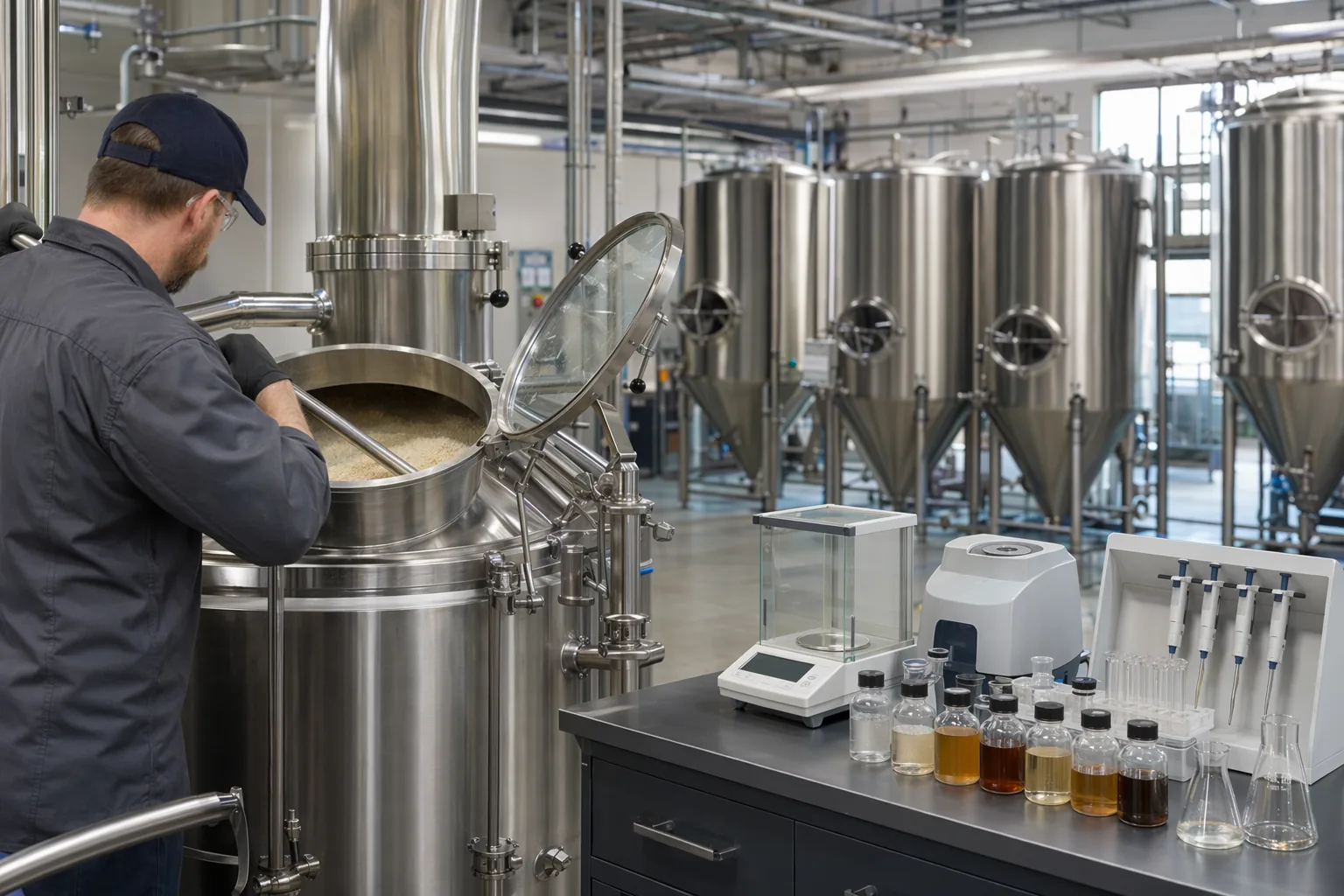
A practical comparison guide for brewers and procurement teams evaluating Glucoamylase Premium as a saccharification enzyme for fermentable extract, attenuation, and consistent process economics.
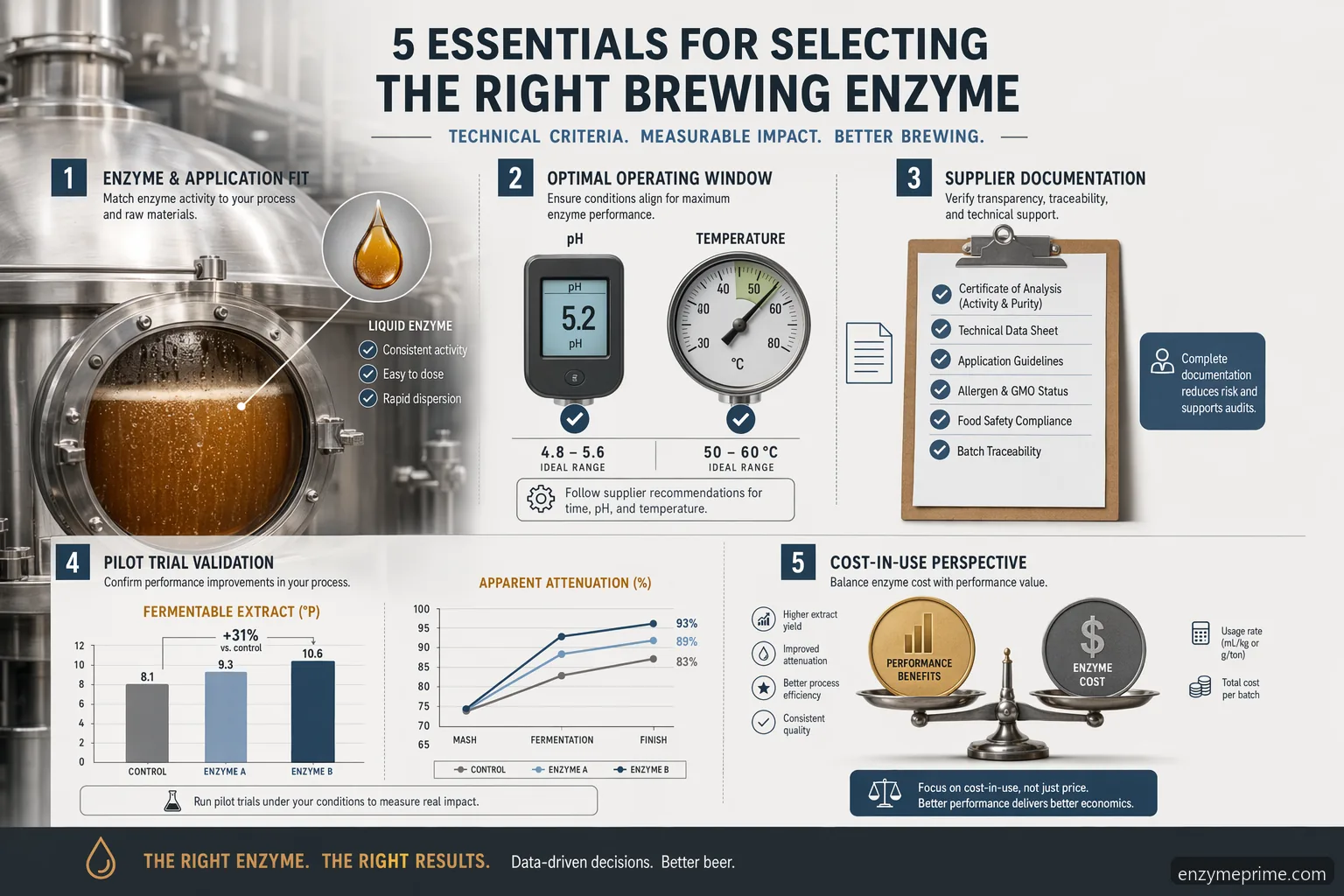
Why compare glucoamylase for brewing by process fit, not headline activity
Industrial buyers often start by comparing activity units, but glucoamylase brewing performance depends on how well the enzyme fits the mash, adjunct, or fermentation process. Glucoamylase hydrolyzes alpha-1,4 and, more slowly, alpha-1,6 glucosidic bonds from non-reducing starch and dextrin ends, releasing glucose for yeast fermentation. In brewing, this can support higher attenuation, low-carbohydrate beer production, adjunct conversion, or improved fermentable extract when used with the right liquefaction and mashing strategy. A premium AMG-style product should be evaluated as a starch to glucose enzyme within the full process, not as an isolated additive. Key comparison points include operational pH, temperature tolerance, substrate profile, required contact time, dosing control, and downstream impact on flavor and filtration. For B2B procurement, the best choice is the enzyme that delivers repeatable fermentability and predictable cost-in-use under validated plant conditions.
Prioritize process compatibility over activity claims alone. • Match enzyme use point to mash, adjunct cook, or fermentation objectives. • Confirm the product is intended for industrial brewing use.
Core operating window for glucoamylase enzyme brewing trials
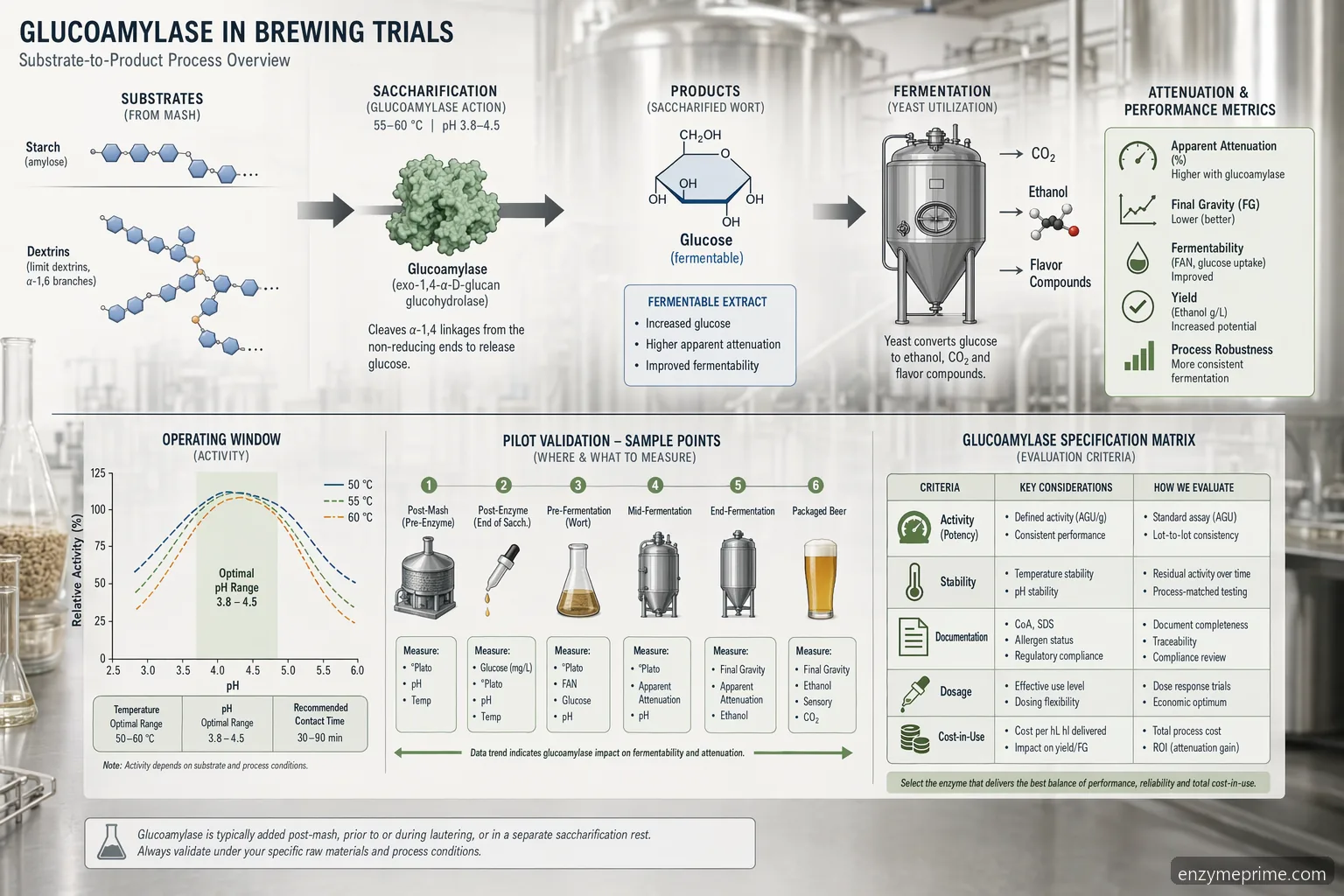
A typical glucoamylase enzyme brewing evaluation should define a safe starting window before plant-scale use. Many fungal glucoamylase preparations perform well around pH 4.0 to 5.5, with common working temperatures from 55 to 65 degrees Celsius for saccharification, depending on formulation and process hold time. If dosing into fermentation, lower temperatures and fermentation pH can reduce reaction rate, so contact time becomes a critical variable. Practical dosage screening may begin around 50 to 300 grams per metric ton of grist, adjunct dry solids, or starch equivalent, adjusted by enzyme activity and target attenuation. Final dosage should be based on fermentability, residual extract, and sensory acceptance, not a generic maximum. When brewing with glucoamylase, ensure upstream liquefaction and gelatinization are adequate, because poorly prepared starch limits the value of even a high-quality saccharification enzyme.
Start trials with defined pH, temperature, contact time, and substrate basis. • Use small dosage increments to avoid over-attenuation. • Document whether dosing is calculated on grist, adjunct solids, or starch.
Documentation to request before supplier comparison
Before approving any industrial glucoamylase brewing candidate, request the current technical data sheet, certificate of analysis, and safety data sheet. The TDS should state enzyme type, declared activity, recommended pH and temperature ranges, appearance, solubility or dispersion behavior, storage conditions, shelf-life guidance, and suggested applications such as brewing, glucose syrup, or high fructose corn syrup saccharification. The COA should identify lot number, activity result, relevant quality parameters, and release criteria. The SDS should support safe handling, storage, spill response, and worker protection planning. Avoid relying on unsupported claims or informal datasheets without lot-specific confirmation. If your site has allergen, GMO, halal, kosher, or regional regulatory requirements, ask the supplier for available statements rather than assuming certification. Strong documentation helps procurement compare glucoamylase suppliers consistently and gives production, quality, and EHS teams a shared approval basis.
Request COA, TDS, and SDS for the exact product and lot where possible. • Check whether declared activity units are comparable across suppliers. • Ask for written change-notification practices.
Pilot validation: what to measure before scale-up
Pilot validation should reproduce the intended use point, residence time, and process variability of the brewery. For mash or adjunct saccharification, monitor pH, temperature, mash thickness, iodine reaction, dextrose equivalent trend if relevant, glucose formation, and fermentable sugar profile. For fermentation dosing, track original extract, apparent and real attenuation, alcohol yield, residual carbohydrates, fermentation rate, yeast performance, and final beer specifications. Sensory review is essential because higher glucose availability may alter fermentation kinetics and flavor balance. Filtration and clarification should also be checked, especially when high adjunct levels or enzyme-assisted attenuation are involved. A good glucoamylase supplier for brewing should help design a dosage matrix and interpret results without forcing immediate scale-up. The goal is to confirm the lowest reliable dose that reaches specification under realistic operating conditions.
Run a control, low dose, target dose, and high dose where feasible. • Measure both analytical performance and sensory impact. • Confirm repeatability across more than one brew or fermentation.
Cost-in-use and supplier qualification checklist
For comparison purchasing, the lowest price per kilogram is rarely the best measure. Calculate cost-in-use from delivered enzyme cost, recommended dosage, activity stability, yield improvement, attenuation target, reduced rework, inventory life, and logistics reliability. A concentrated glucoamylase enzyme may cost more per kilogram but use less per batch, while a lower-priced product may require higher dosing or tighter process control. Supplier qualification should include manufacturing consistency, batch traceability, lead time, packaging options, storage requirements, technical responsiveness, and the ability to support deviations or scale-up questions. Ask how the supplier manages formulation changes and whether they can provide advance notice when specifications, raw materials, or production sites change. For industrial glucoamylase brewing programs, choose a partner that supports both procurement efficiency and brewing performance, with transparent documentation and practical process guidance.
Compare delivered cost per hectoliter or per metric ton of grist. • Include yield, attenuation, and rework reduction in the calculation. • Qualify the supplier before routine production dependence.
Technical Buying Checklist
Buyer Questions
Glucoamylase in brewing is used to convert starch-derived dextrins into fermentable glucose, helping brewers reach higher attenuation or specific carbohydrate targets. It may be applied during mash saccharification, adjunct processing, or fermentation depending on the beer style and process design. The correct use point, pH, temperature, and dosage should be validated because excessive conversion can change body, alcohol level, and flavor balance.
Compare products by declared activity, pH and temperature fit, dosage requirement, performance in your wort or adjunct system, documentation quality, and supplier support. Do not rely only on price per kilogram. Run pilot trials with defined analytical targets such as fermentability, residual extract, attenuation, alcohol yield, and sensory acceptance. Include COA, TDS, SDS, lead time, packaging, and change-control communication in the purchasing decision.
A practical trial range is often about 50 to 300 grams per metric ton of grist, adjunct dry solids, or starch equivalent, but the correct dose depends on enzyme activity, substrate preparation, contact time, pH, temperature, and target attenuation. Start with a controlled dosage matrix rather than a single plant-scale dose. Final approval should be based on repeatable pilot or production data and cost-in-use.
A qualified supplier should provide a technical data sheet, certificate of analysis, and safety data sheet for the glucoamylase enzyme. The TDS should describe application guidance, activity, operating range, storage, and shelf life. The COA should confirm lot-specific quality results. The SDS supports safe handling and storage. If your market requires additional statements, request them directly rather than assuming they apply.
Glucoamylase (Premium Grade) for Research & Industry
Need Glucoamylase (Premium Grade) for your lab or production process?
ISO 9001 certified · Food-grade & research-grade · Ships to 80+ countries
Frequently Asked Questions
What is glucoamylase used for in brewing?
Glucoamylase in brewing is used to convert starch-derived dextrins into fermentable glucose, helping brewers reach higher attenuation or specific carbohydrate targets. It may be applied during mash saccharification, adjunct processing, or fermentation depending on the beer style and process design. The correct use point, pH, temperature, and dosage should be validated because excessive conversion can change body, alcohol level, and flavor balance.
How should industrial buyers compare glucoamylase enzyme brewing products?
Compare products by declared activity, pH and temperature fit, dosage requirement, performance in your wort or adjunct system, documentation quality, and supplier support. Do not rely only on price per kilogram. Run pilot trials with defined analytical targets such as fermentability, residual extract, attenuation, alcohol yield, and sensory acceptance. Include COA, TDS, SDS, lead time, packaging, and change-control communication in the purchasing decision.
What dosage should be used when brewing with glucoamylase?
A practical trial range is often about 50 to 300 grams per metric ton of grist, adjunct dry solids, or starch equivalent, but the correct dose depends on enzyme activity, substrate preparation, contact time, pH, temperature, and target attenuation. Start with a controlled dosage matrix rather than a single plant-scale dose. Final approval should be based on repeatable pilot or production data and cost-in-use.
Which documents should a glucoamylase supplier for brewing provide?
A qualified supplier should provide a technical data sheet, certificate of analysis, and safety data sheet for the glucoamylase enzyme. The TDS should describe application guidance, activity, operating range, storage, and shelf life. The COA should confirm lot-specific quality results. The SDS supports safe handling and storage. If your market requires additional statements, request them directly rather than assuming they apply.
Related: Buy Glucoamylase for Reliable Starch Conversion
Turn This Guide Into a Supplier Brief Request Glucoamylase Premium TDS, SDS, COA, and pilot-trial support from Enzyme Prime. See our application page for Buy Glucoamylase for Reliable Starch Conversion at /applications/buy-glucoamylase-price/ for specs, MOQ, and a free 50 g sample.
Contact Us to Contribute